Showing posts with label History. Show all posts

Wednesday, July 9, 2014

Physics on the wane

Steve Hays recently made the following point, with which I'd agree:

Physicists have a reputation for being the smartest scientists. Smarter than biologists. That's ironic since biology is far more varied and complicated than physics, so–if anything–you'd expect great biologists to be smarter than great physicists.

Just to add to Steve's thoughts:

1. I suppose some of this is self-perpetuated by physicists as a community. For example, people like Richard Feynman and Murray Gell-Mann seem to have incessantly talked about how smart they were or are.

2. Plus, I think the most impressive scientific discoveries in the first half or two-thirds of the 20th century, certainly to the public if not also impressive in their own right, have largely been in physics (e.g. Bohr's model of the atom, Einstein's theories of relativity, the big bang theory, QM).

3. Not to mention the technological applications in the wake of these discoveries in physics (e.g. nuclear weapons, spaceflight, maybe modern computers to an extent - although I think computers are probably better attributed to mathematicians such as those who served as code crackers in WW2).

4. All this presumably gives the public the impression that physicists are like modern wizards (e.g. able to unlock the inner workings of the atom to harness nuclear energy).

5. Related, I've also read JFK's administration really pushed science, math, and engineering on the American public mainly in order to compete with the Soviet Union in the space race (e.g. to land a man on the moon). I could be wrong, of course, but I assume this would positively affect the perception of these fields in the minds of most of the public, if not also make the public think these are the fields all the really smart students should strive for.

6. However, as we know, it seems there haven't been as many momentous moments in physics in recent years. Today some even joke physics is far too speculative (e.g. string theory, multiverse).

7. My impression is biology started really taking off as a field around the time when physics began to wane, say, around the middle of the 20th century. Such as with physicist Erwin Schrödinger's What Is Life? series of lectures. And especially with the discovery of the structure of DNA by Watson and Crick. Crick himself of course was a physicist turned biologist.

From DNA, we learned about genes, chromosomes, etc., at least on levels deeper than Mendelian genetics.

This coincided with medical discoveries and applications like Fleming's discovery of penicillin as an antibiotic.

Likewise, people began to apply mathematics to biology (e.g. population genetics - which with Darwinism and genetics now form the neo-Darwinian synthesis).

In our time we've had the sequencing of the human genome, among other genomes. And there still seem to be so many discoveries awaiting scientists working in biology or related fields (e.g. biochemistry, pharmaceuticals).

In any case, perhaps future generations who have lived through this era where it seems physics is waning while biology is waxing or on the rise will have a different impression than previous generations who have lived through the apogee of physics.

8. For better or for worse, many smart people primarily chase the money. For instance, rather than going for a PhD in something they could do like physics, and hoping for an academic career, some people decide instead to stop at a bachelor's degree in order to try their hand working for a large company in Silicon Valley like Google or Pixar. Of course, one can still do significant research at these companies, but is the opportunity cost vs return worth it for them?

9. I suppose the truth or at least in the direction of the truth is that the smartest people are those who are fluent in abstract and analytical reasoning and able to apply it to whatever field they're interested in (e.g. theology, philosophy, mathematics).

10. By the way, I think William Dembski, for one, who I'm sure could've done physics if he wanted to, but instead chose to apply himself more to the biological sciences side of ID, is considerably smarter than physicists like Victor Stenger or Lawrence Krauss. I think it might even be arguable Dembski is on par with Stephen Hawking or Roger Penrose. Of course, Dembski gets such a bad wrap due to his Christian beliefs.

Thursday, August 15, 2013

Good gap arguments?

From Angus Menuge ("Against Methodological Materialism," Waning of Materialism, p 381):

[E]ntirely materialistic science employs gap arguments routinely when explaining unlikely historical events. The most widely accepted explanation of the geologically rapid, widespread extinction of dinosaurs invokes a rare, but fully materialistic event: asteroid impact. Part of the evidence for this event is that none of the processes believed to be going on at the time (including likely diseases - initially a competing hypothesis) are sufficient to account for such a catastrophic extinction. In other words, there is a gap between these processes and the fact of extinction. Asteroid impact was then hypothesized as a possible cause, leading to independent predictions of shocked quartz in the Cretaceous-Tertiary boundary, which were subsequently confirmed. Not only is this gap argument completely materialistic, it is also a good one, because it depends on the confirmation of independently testable predictions that discriminate between the asteroid hypothesis and its competitors.

In fact, historical science of all kinds is filled with gap arguments. There is a gap between the unloaded military antique mounted on a wall and the deceased Colonel Mustard who was somehow killed using the antique, and this gap may be best explained by the intelligent agency of a murderer. There is a horrific numerical gap between the population records for Jews and Slavs before and after the Second World War that is best explained by deliberate genocide. There may be a gap between a student's own creative ability and the spectacular slide show on impressionism he presented, best explained by the artistic skill of impressionist artists. Evolutionary scientists themselves frequently employ gap-arguments, claiming that there must have been intermediary creatures between those whose fossils have actually been discovered, for otherwise there is no suitably gradual explanation of the presumed transitions. In general, a good gap argument is based on a careful assessment of what the normal course of nature is capable of doing, thereby providing evidence of an objective gap in nature, not merely a gap in our knowledge, and this leads to the postulation of some additional factor or agency whose causal powers are known to be capable of filling the gap. Good gap arguments are therefore not arguments from ignorance but arguments from knowledge, both of what nature is normally capable of doing, and of the resources capable of doing more.

Sunday, May 6, 2012

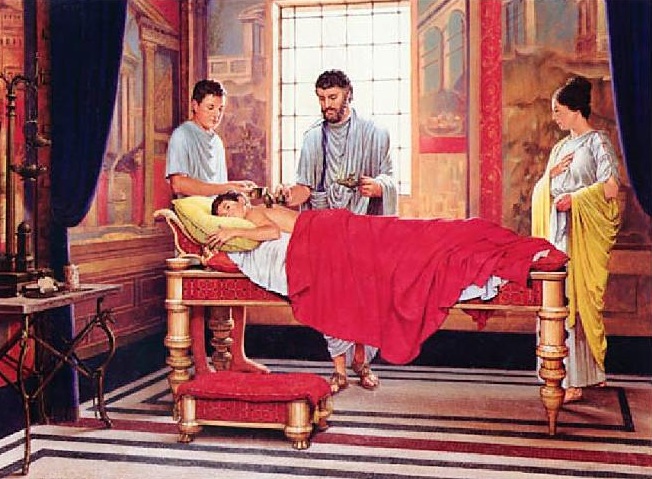
History of medical discoveries

A cool little timeline of the history of medical discoveries.

Although I suppose it's understandable why they chose otherwise, I still wish they had included medicine prior to the modern era. Hence my above image.

Wednesday, February 1, 2012

Plymouth


As we know, the Pilgrims founded Plymouth Colony in Massachusetts in 1620. I believe Plymouth Colony was named after the town of Plymouth in England from which the Pilgrims originally set sail on the Mayflower.

Several years later in 1625 the Pilgrims sent two ships back to England loaded with goods like beaver skins and dried fish to trade for other supplies the colony needed. Governor William Bradford wrote about what happened next in his journal Of Plymouth Plantation. I've updated the language.
As the two ships went joyfully home together, the bigger ship towing the lesser all the way till they are shot deep into the English channel, almost within sight of Plymouth; and yet there she was unhappily taken by a Turkish man-of-war, and carried off to Sally, where the master of the ship and the men were made slaves, and many of the beaver skins were sold for four pence apiece. Thus were all their hopes dashed, and the joyful news they meant to carry home turned to heavy tidings. Some thought this a hand of God for their too great exaction of the poor plantation, but God's judgments are unsearchable, neither dare I be bold therewith; however it shows us the uncertainty of all human things, and what litle cause there is of joying in them or trusting to them.

Friday, January 20, 2012

Murdered by an assassin, killed by medicine


I shudder to consider what the best medical science had to offer in the late 1800s, although I wonder what medical scientists and physicians will think of us in a hundred or so years (if the Lord has not come by then):
President James A. Garfield lay in a rodent-infested sickroom in the White House, a bullet lodged in his body. Weeks had passed since the assassin had struck, but more than a dozen doctors were struggling to save him. Day after day, summer temperatures approached 100 degrees, and mosquitoes thrived in the swamps around Washington. Four White House staff members had contracted malaria recently, as had the first lady, Lucretia Garfield. The president’s internal infections raged and spread, fevers came and went, and his heart began to weaken. He felt it most in his lower extremities—the acute neurological sensations he called “tiger’s claws,” which seized him regularly. Aides at his bedside would squeeze his feet and calves with all their might to relieve the 49-year-old president’s pain.

“Yes, I suffer some,” he told one attendant. “I suppose the tigers are coming back, but they don’t usually stay long. Don’t be alarmed, old boy!”

His three oldest children, Harry, James and Mollie, all teenagers, were taken into his room for visits, advised to do most of the talking and not to bring up anything unpleasant out of fear of aggravating their father’s condition. Doctors desperately probed Garfield’s abdomen with unsterilized tools and unwashed hands in search of the bullet, which had lodged harmlessly in soft tissue near his vertebrae. Such a gunshot wound today would require no more than a few days in the hospital. But the 20th president of the United States was spiraling rapidly and inevitably to his death—bravely and for the most part in good cheer as his physicians made one mistake after another, from nutrition to medication. . . .

The president was taken to the White House. Over the next 24 hours, more than 15 doctors stuffed their unwashed fingers into his intestinal wound, trying to locate Guiteau’s bullet and ultimately causing sepsis. They repeatedly injected him with morphine, causing the president to vomit; they next tried champagne, which only made him sicker. Joseph Lister, a British surgeon and pioneer of antiseptic surgery, had been advocating since Lincoln’s death for more sterile procedures and environments, but American doctors ridiculed him. “In order to successfully practice Mr. Lister’s Antiseptic Method,” one doctor scoffed in 1878, “it is necessary that we should believe, or act as if we believed, the atmosphere to be loaded with germs.”

As the weeks passed, Garfield’s body became engorged with pus. His face began to swell and had to be drained. Initial meals of steak, eggs and brandy were soon replaced by eggs, bouillon, milk, whiskey and opium. He lost nearly 100 pounds as his doctor’s starved him. Doctors inserted drainage tubes and continued to probe for the bullet; at one point, they brought in Alexander Graham Bell, who had invented a metal detector and thought he might be able to locate the slug by passing it over the president’s abdomen. All was for naught.

Garfield asked to be moved to a peaceful oceanfront cottage in Long Branch, New Jersey where he’d been a regular visitor over the years. Local residents, informed that the ailing president was planning to arrive in Long Branch, laid down half a mile of railroad tracks in 24 hours, so that rather than ride by horse and carriage over rough roads, the president could be taken smoothly by train, right to the cottage door. Garfield found no relief from the staggering heat, and he died in his bed in the New Jersey cottage on September 18, 1881, less than two weeks after he arrived. On the following day, the emergency tracks were torn up and the wooden ties were used to build the Garfield Tea House, which stands today. That November, Charles Guiteau stood trial for murder, was convicted and hanged the following summer. Defending himself in court, he had declared, “The doctors killed Garfield, I just shot him.”
HT: Tim Challies.

Monday, January 2, 2012

The West and the rest

Why is the West is so much more successful than the rest of the world?

A significant (and probably fair) assumption is success is primarily measured in terms of economics, wealth, quality of life.

Economic historian Niall Ferguson offers an explanation which involves "six killer apps" in his TED talk: competition; the Scientific Revolution; the rule of law and representative government; modern medicine; the consumer society; and the Protestant work ethic. Further he argues other nations are adopting these "six killer apps" today, thereby making themselves successful, whereas these "apps" are degrading in Western nations. Although it remains an open question whether all six "apps" are necessary for success and whether the sequence matters (e.g. China does not have representative government but does have a strong work ethic).

This is in the vein of Victor Davis Hanson's earlier work Carnage and Culture, which in turn is a response to Jared Diamond's Guns, Germs, and Steel. If it can be reduced to a single word, Diamond's book argues the West is so much more successful because of geography. Hanson responds and argues, again if we can reduce the argument to a word, that it is not geography but culture.

By the way, Ferguson points out the economic and many other significant discrepancies between East and West Germany (prior to the end of the Cold War) and the current discrepancies between North and South Korea rule out geography as an explanation because Germany and Korea would be in the same geographic area, with similar natural resources, societies and culture, etc. Their main difference is democracy vs. communism. (Although I wonder if East Germany and North Korea don't have less natural resources and more geographic obstacles than West Germany and South Korea?)

Rodney Stark's books argue the success is fundamentally due to religion i.e. Judeo-Christianity.

Speaking for myself, at the end of the day I'd side with Stark, although there are merits to everyone's points, to varying degrees.

Showing posts with label History. Show all posts

Wednesday, July 9, 2014

Physics on the wane

Steve Hays recently made the following point, with which I'd agree:

Physicists have a reputation for being the smartest scientists. Smarter than biologists. That's ironic since biology is far more varied and complicated than physics, so–if anything–you'd expect great biologists to be smarter than great physicists.

Just to add to Steve's thoughts:

1. I suppose some of this is self-perpetuated by physicists as a community. For example, people like Richard Feynman and Murray Gell-Mann seem to have incessantly talked about how smart they were or are.

2. Plus, I think the most impressive scientific discoveries in the first half or two-thirds of the 20th century, certainly to the public if not also impressive in their own right, have largely been in physics (e.g. Bohr's model of the atom, Einstein's theories of relativity, the big bang theory, QM).

3. Not to mention the technological applications in the wake of these discoveries in physics (e.g. nuclear weapons, spaceflight, maybe modern computers to an extent - although I think computers are probably better attributed to mathematicians such as those who served as code crackers in WW2).

4. All this presumably gives the public the impression that physicists are like modern wizards (e.g. able to unlock the inner workings of the atom to harness nuclear energy).

5. Related, I've also read JFK's administration really pushed science, math, and engineering on the American public mainly in order to compete with the Soviet Union in the space race (e.g. to land a man on the moon). I could be wrong, of course, but I assume this would positively affect the perception of these fields in the minds of most of the public, if not also make the public think these are the fields all the really smart students should strive for.

6. However, as we know, it seems there haven't been as many momentous moments in physics in recent years. Today some even joke physics is far too speculative (e.g. string theory, multiverse).

7. My impression is biology started really taking off as a field around the time when physics began to wane, say, around the middle of the 20th century. Such as with physicist Erwin Schrödinger's What Is Life? series of lectures. And especially with the discovery of the structure of DNA by Watson and Crick. Crick himself of course was a physicist turned biologist.

From DNA, we learned about genes, chromosomes, etc., at least on levels deeper than Mendelian genetics.

This coincided with medical discoveries and applications like Fleming's discovery of penicillin as an antibiotic.

Likewise, people began to apply mathematics to biology (e.g. population genetics - which with Darwinism and genetics now form the neo-Darwinian synthesis).

In our time we've had the sequencing of the human genome, among other genomes. And there still seem to be so many discoveries awaiting scientists working in biology or related fields (e.g. biochemistry, pharmaceuticals).

In any case, perhaps future generations who have lived through this era where it seems physics is waning while biology is waxing or on the rise will have a different impression than previous generations who have lived through the apogee of physics.

8. For better or for worse, many smart people primarily chase the money. For instance, rather than going for a PhD in something they could do like physics, and hoping for an academic career, some people decide instead to stop at a bachelor's degree in order to try their hand working for a large company in Silicon Valley like Google or Pixar. Of course, one can still do significant research at these companies, but is the opportunity cost vs return worth it for them?

9. I suppose the truth or at least in the direction of the truth is that the smartest people are those who are fluent in abstract and analytical reasoning and able to apply it to whatever field they're interested in (e.g. theology, philosophy, mathematics).

10. By the way, I think William Dembski, for one, who I'm sure could've done physics if he wanted to, but instead chose to apply himself more to the biological sciences side of ID, is considerably smarter than physicists like Victor Stenger or Lawrence Krauss. I think it might even be arguable Dembski is on par with Stephen Hawking or Roger Penrose. Of course, Dembski gets such a bad wrap due to his Christian beliefs.

Thursday, August 15, 2013

Good gap arguments?

From Angus Menuge ("Against Methodological Materialism," Waning of Materialism, p 381):

[E]ntirely materialistic science employs gap arguments routinely when explaining unlikely historical events. The most widely accepted explanation of the geologically rapid, widespread extinction of dinosaurs invokes a rare, but fully materialistic event: asteroid impact. Part of the evidence for this event is that none of the processes believed to be going on at the time (including likely diseases - initially a competing hypothesis) are sufficient to account for such a catastrophic extinction. In other words, there is a gap between these processes and the fact of extinction. Asteroid impact was then hypothesized as a possible cause, leading to independent predictions of shocked quartz in the Cretaceous-Tertiary boundary, which were subsequently confirmed. Not only is this gap argument completely materialistic, it is also a good one, because it depends on the confirmation of independently testable predictions that discriminate between the asteroid hypothesis and its competitors.

In fact, historical science of all kinds is filled with gap arguments. There is a gap between the unloaded military antique mounted on a wall and the deceased Colonel Mustard who was somehow killed using the antique, and this gap may be best explained by the intelligent agency of a murderer. There is a horrific numerical gap between the population records for Jews and Slavs before and after the Second World War that is best explained by deliberate genocide. There may be a gap between a student's own creative ability and the spectacular slide show on impressionism he presented, best explained by the artistic skill of impressionist artists. Evolutionary scientists themselves frequently employ gap-arguments, claiming that there must have been intermediary creatures between those whose fossils have actually been discovered, for otherwise there is no suitably gradual explanation of the presumed transitions. In general, a good gap argument is based on a careful assessment of what the normal course of nature is capable of doing, thereby providing evidence of an objective gap in nature, not merely a gap in our knowledge, and this leads to the postulation of some additional factor or agency whose causal powers are known to be capable of filling the gap. Good gap arguments are therefore not arguments from ignorance but arguments from knowledge, both of what nature is normally capable of doing, and of the resources capable of doing more.

Sunday, May 6, 2012

History of medical discoveries

A cool little timeline of the history of medical discoveries.

Although I suppose it's understandable why they chose otherwise, I still wish they had included medicine prior to the modern era. Hence my above image.

Wednesday, February 1, 2012

Plymouth


As we know, the Pilgrims founded Plymouth Colony in Massachusetts in 1620. I believe Plymouth Colony was named after the town of Plymouth in England from which the Pilgrims originally set sail on the Mayflower.

Several years later in 1625 the Pilgrims sent two ships back to England loaded with goods like beaver skins and dried fish to trade for other supplies the colony needed. Governor William Bradford wrote about what happened next in his journal Of Plymouth Plantation. I've updated the language.
As the two ships went joyfully home together, the bigger ship towing the lesser all the way till they are shot deep into the English channel, almost within sight of Plymouth; and yet there she was unhappily taken by a Turkish man-of-war, and carried off to Sally, where the master of the ship and the men were made slaves, and many of the beaver skins were sold for four pence apiece. Thus were all their hopes dashed, and the joyful news they meant to carry home turned to heavy tidings. Some thought this a hand of God for their too great exaction of the poor plantation, but God's judgments are unsearchable, neither dare I be bold therewith; however it shows us the uncertainty of all human things, and what litle cause there is of joying in them or trusting to them.

Friday, January 20, 2012

Murdered by an assassin, killed by medicine


I shudder to consider what the best medical science had to offer in the late 1800s, although I wonder what medical scientists and physicians will think of us in a hundred or so years (if the Lord has not come by then):
President James A. Garfield lay in a rodent-infested sickroom in the White House, a bullet lodged in his body. Weeks had passed since the assassin had struck, but more than a dozen doctors were struggling to save him. Day after day, summer temperatures approached 100 degrees, and mosquitoes thrived in the swamps around Washington. Four White House staff members had contracted malaria recently, as had the first lady, Lucretia Garfield. The president’s internal infections raged and spread, fevers came and went, and his heart began to weaken. He felt it most in his lower extremities—the acute neurological sensations he called “tiger’s claws,” which seized him regularly. Aides at his bedside would squeeze his feet and calves with all their might to relieve the 49-year-old president’s pain.

“Yes, I suffer some,” he told one attendant. “I suppose the tigers are coming back, but they don’t usually stay long. Don’t be alarmed, old boy!”

His three oldest children, Harry, James and Mollie, all teenagers, were taken into his room for visits, advised to do most of the talking and not to bring up anything unpleasant out of fear of aggravating their father’s condition. Doctors desperately probed Garfield’s abdomen with unsterilized tools and unwashed hands in search of the bullet, which had lodged harmlessly in soft tissue near his vertebrae. Such a gunshot wound today would require no more than a few days in the hospital. But the 20th president of the United States was spiraling rapidly and inevitably to his death—bravely and for the most part in good cheer as his physicians made one mistake after another, from nutrition to medication. . . .

The president was taken to the White House. Over the next 24 hours, more than 15 doctors stuffed their unwashed fingers into his intestinal wound, trying to locate Guiteau’s bullet and ultimately causing sepsis. They repeatedly injected him with morphine, causing the president to vomit; they next tried champagne, which only made him sicker. Joseph Lister, a British surgeon and pioneer of antiseptic surgery, had been advocating since Lincoln’s death for more sterile procedures and environments, but American doctors ridiculed him. “In order to successfully practice Mr. Lister’s Antiseptic Method,” one doctor scoffed in 1878, “it is necessary that we should believe, or act as if we believed, the atmosphere to be loaded with germs.”

As the weeks passed, Garfield’s body became engorged with pus. His face began to swell and had to be drained. Initial meals of steak, eggs and brandy were soon replaced by eggs, bouillon, milk, whiskey and opium. He lost nearly 100 pounds as his doctor’s starved him. Doctors inserted drainage tubes and continued to probe for the bullet; at one point, they brought in Alexander Graham Bell, who had invented a metal detector and thought he might be able to locate the slug by passing it over the president’s abdomen. All was for naught.

Garfield asked to be moved to a peaceful oceanfront cottage in Long Branch, New Jersey where he’d been a regular visitor over the years. Local residents, informed that the ailing president was planning to arrive in Long Branch, laid down half a mile of railroad tracks in 24 hours, so that rather than ride by horse and carriage over rough roads, the president could be taken smoothly by train, right to the cottage door. Garfield found no relief from the staggering heat, and he died in his bed in the New Jersey cottage on September 18, 1881, less than two weeks after he arrived. On the following day, the emergency tracks were torn up and the wooden ties were used to build the Garfield Tea House, which stands today. That November, Charles Guiteau stood trial for murder, was convicted and hanged the following summer. Defending himself in court, he had declared, “The doctors killed Garfield, I just shot him.”
HT: Tim Challies.

Monday, January 2, 2012

The West and the rest

Why is the West is so much more successful than the rest of the world?

A significant (and probably fair) assumption is success is primarily measured in terms of economics, wealth, quality of life.

Economic historian Niall Ferguson offers an explanation which involves "six killer apps" in his TED talk: competition; the Scientific Revolution; the rule of law and representative government; modern medicine; the consumer society; and the Protestant work ethic. Further he argues other nations are adopting these "six killer apps" today, thereby making themselves successful, whereas these "apps" are degrading in Western nations. Although it remains an open question whether all six "apps" are necessary for success and whether the sequence matters (e.g. China does not have representative government but does have a strong work ethic).

This is in the vein of Victor Davis Hanson's earlier work Carnage and Culture, which in turn is a response to Jared Diamond's Guns, Germs, and Steel. If it can be reduced to a single word, Diamond's book argues the West is so much more successful because of geography. Hanson responds and argues, again if we can reduce the argument to a word, that it is not geography but culture.

By the way, Ferguson points out the economic and many other significant discrepancies between East and West Germany (prior to the end of the Cold War) and the current discrepancies between North and South Korea rule out geography as an explanation because Germany and Korea would be in the same geographic area, with similar natural resources, societies and culture, etc. Their main difference is democracy vs. communism. (Although I wonder if East Germany and North Korea don't have less natural resources and more geographic obstacles than West Germany and South Korea?)

Rodney Stark's books argue the success is fundamentally due to religion i.e. Judeo-Christianity.

Speaking for myself, at the end of the day I'd side with Stark, although there are merits to everyone's points, to varying degrees.