Showing posts with label Medicine. Show all posts

Thursday, July 27, 2017

Delta Delta Delta force, can I help ya, help ya, help ya?

A friend emails to ask:

On the transgender troops issue, would a woman who's having her period be a problem when elite forces go out on a mission?

Definitely:

  1. We can distinguish between three categories: premenstrual symptoms, premenstrual syndrome (PMS), and premenstrual dysphoric disorder (PMDD). Each subsequent category is worse than the previous category. Premenstrual symptoms occur in approximately 75%-85% of all women, PMS occurs in approximately 5%-10% of all women, and PMDD occurs in approximately 3%-5% of all women.

    PMS and especially PMDD would be particularly destabilizing for women in special forces. I think that's fairly obvious to most people. So I'll simply focus on premenstrual symptoms.

  2. Premenestrual symptoms can be physical as well as psychological or emotional. The most common physical symptoms include swollen and tender breasts, pelvic pain, abdominal pain, diarrhea or constipation, headaches (e.g. migraines), skin changes (e.g. acne), hot flashes, altered cravings (e.g. craving candy), weight gain, local or generalized aches and pains (e.g. back pain). The most common psychological or emotional symptoms include moodiness, irritability, depression, confusion, temporary mild amnesia, anxiety, malaise, fatigue, insomnia, a sense of being "out of control".

    Again, keep in mind PMS and PMDD would have worse premenstrual symptoms and/or significantly more premenstrual symptoms.

    It should be fairly obvious none of these symptoms would be beneficial as a Navy SEAL or other special forces member. What's worse, most of these symptoms could be detrimental in certain situations operating as a member of the special forces. Not only to the woman herself, but to her fellow team members.

  3. Premenstrual symptoms generally peak around age 25-30 which would coincide with the time people tend to be at their physical peak as well.

  4. A woman could attempt to treat or manage her premenstrual symptoms (e.g. oral contraceptive combinations, depot injections, oophorectomy would be very radical). These have varying degrees of effectiveness as well as varying degrees of risks, even in ones that are deemed "safe". And I'm not sure how practical or effective these would be on a mission where the woman is sleeping in the rough, crisscrossing challenging terrain, in hostile enemy territory, etc.

Friday, April 28, 2017

Miscarriages

A friend asks about miscarriages. For what it's worth, here's my response:

  1. Definitions

    a. Miscarriage is also known as spontaneous abortion. Spontaneous abortion isn't the best term because it can confuse people to think it's associated with elective abortion.

    b. Miscarriage is such a broad term. In general it refers to a pregnancy that spontaneously ends before the embryo or fetus has reached a viable gestational age. A complication is "viable gestational age" is itself a vague term susceptible to change, depending on medical science and technology. Currently that would be around the 20th week of gestation (as calculated from the date of the last menstrual period). However, it's possible future medical science and technology will alter the age of viability.

    c. Another common definition of miscarriage (such as the World Health Organization uses) is the spontaneous expulsion of an embryo or fetus weighing 500 g or less. A 500 g fetus would approximately correspond to the 20th week of gestation.

    d. Miscarriages can be subdivided into complete or incomplete miscarriages. If it's complete, then the uterus is entirely emptied, whereas if it's incomplete, then some tissue remains.

    e. One could make further distinctions such as induced (usually elective) abortions, threatened abortions, inevitable abortions, missed abortions, and tubal abortions or ectopic pregnancies.

  2. Incidence

    a. It's somewhat difficult to obtain accurate numbers (e.g. it depends how miscarriages are detected).

    b. To my knowledge, most of these studies on miscarriages are based on tests measuring β-hCG. However, measuring β-hCG has its limitations. Other tests measure other factors like early pregnancy factor (EPF), but these tests have their limitations too.

    c. The popular belief is the incidence of spontaneous abortion is ~50%. To my knowledge, that's only the case when preimplantation losses are factored in. An extremely pertinent question to ask is, what is the exact nature of these preimplantations? Specifically, how many are viable zygotes/embryos? Unfortunately this is a highly politicized question to ask, but my own research suggests the majority are not viable zygotes/embryos.

    d. What then is the incidence of spontaneous abortions or miscarriages? Estimates range from 8-20% of all clinically recognized pregnancies under 20 weeks. The incidence is significantly lower at 5% among women who have previously had a child. The incidence of spontaneous abortion is higher at 13-26% if we include unrecognized or subclinical pregnancies. (Sources: here, here, here, here, here.)

    e. Finally these figures appear to be largely based on fertilized oocytes. Fertilized oocytes are not necessarily equivalent to what pro-lifers mean when they argue life begins at conception. For one thing, a fertilized oocyte is not necessarily a viable zygote/embryo. Not all fertilized oocytes are chromosomally or structurally normal.

  3. Etiology

    a. The most common cause of spontaneous abortions is most likely due to genetic abnormalities in the embryo or fetus. This is thought to account for ~75% of all spontaneous abortions. The most common genetic abnormalities are autosomal trisomies (50% of all genetic abnormalities). And trisomy 16 (which is 100% lethal) is the most common of the trisomies.

    b. Other causes of spontaneous abortions (~25%) are infections, autoimmune diseases, endocrine issues, uterine issues, and drug or substance abuse.

  4. Risk factors

    The biggest risk factors for spontaneous abortions are: advanced maternal age, previous spontaneous abortion, and maternal smoking (10 cigarettes per day or more).

    It may come as no surprise that Western societies have a significantly increased risk for spontaneous abortion primarily due to advanced maternal age.

  5. Fertilization/conception

    a. I think it's worth noting an important distinction: fertilization is not identical to conception and vice versa. Fertilization occurs when the sperm enters or penetrates the oocyte (later ovum) or egg. Conception occurs when the sperm and egg cease to exist as sperm and egg in order to become a zygote which has its own unique genetic material and which has its own unique behavior.

    b. I think it's possible to argue human life begins either at fertilization or conception. I see merits to both. It's arguable we should play it safe and err on the side of fertilization. I'd argue conception (syngamy) is certainly the latest it could be.

    c. I realize many or most state the sperm and egg fuse, unite, or the like. That's fine as far as it goes, and I don't object to the terminology. However, at certain times it could be misleading language, scientifically speaking. More on this below.

    d. After the sperm has entered the egg, but prior to the creation of the zygote, the sperm and egg duplicate their respective genetic information in becoming paternal pronuclei and maternal pronuclei. The two pronuclei line up and move toward one another within the egg, their nucleic membranes dissolve (not fuse), and the chromosomes pair up to eventually become a new human genome.

    e. Overall it takes approximately 12-18 hours after fertilization for the zygote appear.

  6. References

    Beckmann, C. Obstetrics and Gynecology (2009). (6th ed.).
    Cunnigham et al. (2014). Williams Obstetrics (24th ed.).
    Mularz, A., Dalati, S., & Pedigo, R. (eds.). (2016). OB/GYN Secrets (4th ed.).
    Tulandi, T., & Al-Forzan, H.M. (2017). "Spontaneous abortion: Risk factors, etiology, clinical manifestations, and diagnostic evaluation". In D. Levine, R. Barbieri, & K. Eckler (eds.), UpToDate. Retrieved April 28, 2017, from https://www.uptodate.com/contents/spontaneous-abortion-risk-factors-etiology-clinical-manifestations-and-diagnostic-evaluation

Tuesday, November 1, 2016

Spontaneous remission

Just a few (preliminary) thoughts about "spontaneous remission" in the context of cancer:

  1. A side note regarding terminology:

    a. The term "spontaneous" isn't used only in cancer, but applied to other diseases or pathologies as well. For example, spontaneous mutations, spontaneous abortions, spontaneous pneumothorax, some leprosy (tuberculoid) patients often spontaneously recover, etc. There seems to be a degree of indiscrimination in the use of the term "spontaneous".

    b. Focusing on cancer, I've seen and heard physicians use both "spontaneous regression" as well as "spontaneous remission". Likewise that's what I read in the relevant medical literature. If I had to pick, I'd say I see "spontaneous regression" more often used. However, I'm not sure if there's meant to be a significant distinction between the two or if they're both interchangeable. Perhaps "remission" is meant to suggest permanency in a way "regression" is not? In any case, I don't see how one term makes an important enough difference over the other, but it could be I'm missing some subtleties or nuances.

  2. A few complications which make it more difficult to address spontaneous regression cases:

    a. I think one of the main complications is simply that cancer isn't a single disease. It's a collection of many diseases. What ties them all together into "cancer" is mutations in DNA which lead to a cell growing out of control. There's a plethora of possible mutations which cause cancer. It's not at all uncommon to see 100 mutated genes in a single tumor.

    b. Another major complication is cancer cells are adaptive. Cancer cells can adapt to drugs such as chemotherapies and become resistant to these drugs, similar to bacteria becoming antibiotic resistant.

    c. The last big complication is cancer needs a receptive environment in which to thrive. For example, I've read some people have molecular and cellular changes which are characteristic of leukemia, but they don't have leukemia. That seems to be because the environment of their bodies wasn't receptive to developing leukemia.

  3. Keeping the above complications in mind:

    a. Spontaneous regression can depend on the kind of cancer one has. Spontaneous regression is known to happen in some cancers far more frequently than others (e.g. as many as one-third of low grade lymphomas are known to spontaneously regress without any treatment).

    b. At the same time, it can depend on the patient. That's because it's thought spontaneous regression is most likely an immune phenomenon (i.e. related to immune checkpoint inhibition; cf. PD-1/PD-L1). Our immune system is able to distinguish between friend and foe. Yet cancers can mask themselves as friends when they're really foes, thereby circumventing our immune system. However, it seems some people's immune systems can aid the environment of their bodies, making it less congenial to developing some cancers. (Hence much of the future of cancer therapies is focused on changing the body's environment to make it inhospitable to developing cancer.)

  4. I think all this is actually helpful to know:

    a. For one thing, if some cancers are known to have extremely low spontaneous regression or remission rates, then, if, say, someone prayed over a patient with a cancer with extremely low rates, and their cancer spontaneously regressed, then it'd seem to have the backing of scientific evidence that this type of cancer is highly unlikely to spontaneously regress or remit.

    b. Of course, God could use means by which to spontaneously regress or remit cancers. For example, perhaps prayer "activated" or "deactivated" something in someone's immune system for them to spontaneously regress or remit the cancer. So prayer healing cancer and a known mechanism for spontaneous regression are not necessarily mutually exclusive.

  5. I don't know what kind of cancer Joy Davidman had. I've read she had some sort of bone cancer that metastasized to her breast.

    I'm not sure if the breast metastasis was in her initial diagnosis or if it came later when she finally succumbed to it.

    If her bone cancer had already metastasized to her breast in her initial presentation, then I'd guess it'd be highly unlikely to go into remission. Of course, I'm no oncologist, but given how rare bone cancers are in adults (metastasis to the bones are way more common), given her bone cancer metastasized to her breast, and given back in the 1950s they didn't have a whole lot of the understanding about cancer and how to treat it like we do today (e.g. Watson and Crick had just discovered the structure of DNA in 1953 and cancer is fundamentally a molecular and cellular disease), that's my working assumption.

    If all this is so, then the fact that it did go into remission after prayer should be deemed "miraculous".

Friday, October 14, 2016

A Columbian exchange

A friend ponders:

Today I was reading some entries in The Oxford Companion to Archaeology. Among other things, I read about how the conquistadors were successful in part because the Aztecs and Maya were decimated by smallpox. The conquistadors unwittingly introduced smallpox into the indigenous populations, which had no resistance to the foreign pathogen. Fortuitous biowarfare. That, along with other factors (e.g. superior tactics and technology), enabled them to subdue these warrior civilizations, even though the conquistadors were vastly outnumbered by hostile natives.

This isn't the first time I've read that explanation. But I have some questions:

i) To begin with, why wouldn't that be a two-way street? If the conquistadors were carriers, for which the natives had no resistance–why weren't the natives carriers, for which the conquistadors had no resistance?

ii) According to the CDE, the incubation period for smallpox is between 7-17 days, during which an infected person is asymptomatic and not contagious.

So a sailor would have to become infected before he boarded a ship in Spain. And that would have to be during the incubation period, when he was still asymptomatic. I take it for granted that the captain and crew would not permit a sailor with smallpox symptoms to board the ship. So his symptoms would have to develop at sea, at which point he becomes contagious.

iii) We have to compare that with the time it took ships to sail from Europe to the Americas. Here are two estimates:

Since ships in the 1700s relied on sails to propel them, the length of the voyage greatly depended on the wind. An immigrant who made the journey in 1750 reported that it could take between eight and 12 weeks, while another who arrived in 1724 reported that the journey took six weeks and three days. The average journey was about seven weeks. (Source)

Henry Hudson was a European explorer traveling across the Atlantic during the colonial period. It took Hudson more than two months to sail from Amsterdam to New York City on his sailing ship, the Half Moon. (Source)

Assuming that's accurate, an infected sailor would become visibly symptomatic and contagious during the transatlantic passage. Assuming the crew didn't chuck him overboard, wouldn't there be a raging epidemic onboard by the time the ship docked in Mexico? But from what I've read, the conquistadors were asymptomatic when they disembarked. Moreover, I haven't read reports of conquistadors developing smallpox days or weeks after their arrival. Admittedly, my knowledge of the topic is quite cursory.

Just my thoughts:

I. A two way street

I agree it was a two way street. Native Americans (presumably including the Aztecs and Mayans) did likewise transmit diseases to Europeans (presumably including the conquistadors). For example, it's thought syphilis was likely transmitted from the New World to the Old World (on the Columbian theory). And before antibiotics syphillis could be quite harmful and sometimes even fatal.

There are other diseases Native Americans transmitted to Europeans, though I don't know if these were specifically from the Aztecs or Mayans (e.g. a species of hookworm; Chagas; Rocky Mountain Fever, though this was discovered much later than the 1500s).

II. Smallpox

Some facts about smallpox:

  1. Smallpox is a very large and complex virus. An ancient virus, from the dawn of civilization.

  2. Smallpox is thought to have originated from a domesticated animal, but it doesn't (or no longer can) infect any domesticated or any other animal. That is, there are no animal reservoirs which harbor smallpox. Smallpox only infects humans.

  3. There are actually two main types of smallpox: major and minor. Historically, smallpox major has a high mortality rate (30%), while smallpox minor a much lower one (1%). We could actually subdivide further, but it's not really all that relevant.

    However, I don't know the answer to this, but I wonder if minor existed at this time, and if so, if being infected with minor and surviving grants immunity to major?

  4. Smallpox is primarily transmitted either by droplets up to 3-6 feet (e.g. sneezing) or aerosols which travel farther than droplets and remain suspended in the air for longer periods of time (e.g. coughing). It's highly contagious, though there are other diseases which are more contagious.

    For example, if we compare by herd immunity, measles require upwards of 90-95% of a community to be vaccinated in order to keep measles from spreading to the unvaccinated in a community. However, with smallpox, about 80% of a community needs to be vaccinated in order to keep smallpox from spreading to the unvaccinated in a community. Still high, but not as high as measles.

  5. The average incubation period for smallpox is 10-12 days (range is usually from 7-17 days). The course of smallpox can vary, but usually symptoms will subside 14 days after onset. But (assuming the person survives) it takes another 7-14 days for the scabs to fall off. A person is considered no longer contagious until all their scabs have fallen off. Say for example: 10 days incubation period + 14 days symptoms to subside + 14 days for scabs to fall off = 38 days.

    In case anyone would like a bit more detail (though I could go in more depth than even here). After the incubation period, the patient will experience an acute onset of general signs and symptoms lasting 2-3 days (e.g. fevers, chills, rigors, malaise, aches and pains, nausea and vomiting). After these 2-3 days, the patient will develop a centrifugally distributed rash with lesions usually involving the face and extremities. Over the next 7-8 days, these lesions typically generalize across the entire body, and evolve through various stages (i.e. macular, papular, vesicular, pustular). Within a month or so, the patient will have either improved or not, but even if they improve a lot of complications may persist (e.g. permanent scarring, blindness, arthritis, infection with other opportunistic pathogens like pneumonia).

  6. Smallpox doesn't have a latent state. It doesn't hide as an asymptomatic infection. There's no carrier state for smallpox. Smallpox will produce overt signs (e.g. rash, lesions). (As an aside, this is one reason smallpox was able to be "eradicated".)

  7. If a person is infected with smallpox, but doesn't die, instead recovers, then (generally speaking) they should have lifelong immunity.

  8. As far as anyone is aware, smallpox has been "eradicated". I think the last known case was back in the 1970s. The only official specimens are in the CDC and I believe somewhere in Russia (though it's known the Soviet Union did attempt to weaponize smallpox in the past).

    Of course, who knows if terrorists or other nefarious groups have acquired smallpox which they could weaponize? After all, at one point, there were a lot of labs around the world which had smallpox since there was a lot of research on it. They should have destroyed all the smallpox in their possession, but did everyone do so?

III. Musings and speculations

Given all this:

  1. I suppose the straightforward answer (or one straightforward answer) could be if the conquistadors had already been exposed to smallpox in Spain or Europe and survived, then traveled to the New World to infect the Native Americans.

  2. People like Jared Diamond and Alfred Crosby talk about human contact with animals (especially domesticated animals) in the Old World vs. New World since animals can be reservoirs for infectious diseases. Specifically, living in close proximity to more varieties of animals might be relevant in building a more robust immune system among Europeans like the Spanish in contrast to Native Americans like the Aztecs and Mayans. However, it's debatable, I think.

    More to the point, since smallpox doesn't have an animal reservoir, since smallpox only infects humans, thus humans are its only reservoir, I'm not entirely sure how arguments from Diamond and Crosby would be relevant to smallpox, except indirectly at best, even if they are relevant to other communicable diseases?

  3. I believe people like Diamond and Crosby also talk about how much more dense European population centers were at the time in comparison to Native American population centers, where only a city like Tenochtitlan would've rivaled Europe. A more dense population center may mean more likelihood of exposure to various pathogens, which in turn could perhaps account for more robust immune systems among Europeans in contrast to Native Americans. That might be worth exploring as well, but again it seems to me it's a debatable topic.

  4. Generally speaking, it's possible the immune systems of Aztecs and Mayans are less genetically heterogeneous to one another than the immune systems of the Spanish to other Europeans. Perhaps especially if we accept the Bering strait theory that Native Americans trace their ancestry back to those groups which crossed the Bering strait.

    Anyway, if the Aztecs and Mayans have more genetically similar immune systems to other Native Americans than the Spanish do to other Europeans (say if the immune systems of all Native Americans are 50% identical, while the immune systems of all Europeans are 10% identical, just to use completely made-up figures), then it's possible a pathogen like smallpox could wreak havoc among Native Americans more easily if the pathogen can take advantage of something in the more similar immune systems, whereas the Spanish could more likely resist it.

    However, once again, I think this is debatable. It could just as well be entirely mistaken.

  5. Another consideration is the climate and environment in which infectious diseases tend to thrive and spread. Say Mesoamerica vs. the Spanish peninsula. Was there anything about each environment that made it more likely for certain diseases to thrive and spread? Or which inhibited them from thriving and spreading? Or say temperate climates vs. tropical or sub-tropical climates? And so on.

  6. Quite interestingly, historian Suzanne Alchon argues the following in her book A Pest in the Land: New World Epidemics in a Global Perspective (emphasis mine):

    This study of disease among the native peoples of the New World before and after 1492 challenges many widely held notions about encounters between European and native peoples. Whereas many late twentieth century scholars blamed the catastrophic decline of postconquest native populations on the introduction of previously unknown infections from the Old World, Alchon argues that the experiences of native peoples in the New World closely resembled those of other human populations. Exposure to lethal new infections resulted in rates of morbidity and mortality among native Americans comparable to those found among Old World populations.

    Why then did native American populations decline by 75 to 90 percent in the century following contact with Europeans? Why did these populations fail to recover, in contrast to those of Africa, Asia, and Europe? Alchon points to the practices of European colonialism. Warfare and slavery increased mortality, and forced migrations undermined social, political, and economic institutions.

    This timely study effectively overturns the notion of New World exceptionalism. By showing that native Americans were not uniquely affected by European diseases, Alchon also undercuts the stereotypical notion of the Americas as a new Eden, free of disease and violence until the intrusion of germ-laden, rapacious Europeans.

  7. Along similar lines, it might be useful to look at, say, contemporary tribes in places like South America or Asia (e.g. Papua New Guinea) which have been isolated from contact by civilized societies. I presume anthropologists, for example, would take care to vaccinate themselves against known native diseases, so in the case of modern tribes it might not be a two way street like it was in the past. However, would anthropologists risk bringing their own diseases to some of these tribes if they make contact with these tribes? I suppose they take care to mitigate this possibility with good hygiene, minimal contact, etc. But still the possibility is there.

    Or if these isolated tribes happened upon people from their surrounding modern society. Suppose an Amazonian tribe happening upon Brazilians without any prior warning or other preparation by either side. Would there be any relevant parallels between something like this and the Columbian exchange of disease which we could learn from?

  8. By the way, I suppose if liberal violent PETA types had their way, perhaps smallpox would now be on an endangered species list, and in fact they may even try to spread it! I hope this is just an overly active imagination on my part.

IV. "Genocide"

  1. I've also read (mostly from liberals) how Europeans brought smallpox and other diseases to the New World, thereby causing a "genocide" among Native Americans. I think the term "genocide" is a highly loaded term, to say the least.

    For one thing, did all Europeans in general intentionally give diseases to Native Americans with the goal of wiping out an entire peoples or population? Wasn't the situation far more complex? At the bare minimum, we need to make distinctions between different Europeans and different Native Americans. Perhaps there were some Europeans who did so, but we can't generalize from some to all (e.g. there were some Europeans who helped some Native Americans get inoculated).

    Take this example. I've read there's some debate over some Englishmen giving blankets infected with smallpox to Native Americans in order to kill them. If true, then this would indeed have been a vile and reprehensible act, worthy of all condemnation. Regardless, let's assume it is true - can we therefore conclude all English colonials did the same to all Native Americans whom they encountered?

  2. I've read some people argue as much as 90% of the New World population was destroyed thanks to disease brought by Europeans. Where does this figure come from? How is it calculated?

    For example, is it based on some epidemics (e.g. the cocoliztli epidemics), which, let us say, killed 90% of the Native Americans, then extrapolated to all other Native American communities or populations?

  3. A couple of Mesoamerican epidemics in the 1500s, which killed millions, were caused by what the natives called "cocoliztli". There's debate over what cocoliztli was. Was it smallpox? Was it measles? Was it some unknown disease? Did it originate from the Old World or the New World?

    I've read some argue cocoliztli was a disease indigenous to the New World rather than transmitted by Europeans. For example, see here.

    I haven't deeply looked into any of this, so I don't know.

    However, if cocoliztli was indigenous to the Americas, then it would undercut the idea that it was the European diseases alone which were responsible for the alleged "genocide" of Native Americans. Especially if cocoliztli was not smallpox.

  4. Likewise, from the same article:

    In the 1530s, a band of Spanish adventurers conquered the Inca Empire. It is commonly believed that some kind of epidemic devastated the Andes immediately prior to the Spanish arrival. Noble D Cook has advanced much evidence and argued strongly that this epidemic was of Old World origin, perhaps measles combined with pneumonic plague and influenza.46 However, if our hypothesis for the Mexican case - that some pre-existing New World viral disease became epidemic due to ecological changes brought about by large-scale and relatively sudden alterations of human agricultural practices - is valid, then perhaps the Peruvian case merits further study along these lines.

  5. Perhaps one reason smallpox so easily spread across Mesoamerica (and other parts of the New World) was due to the collapse of social order among the Aztecs and Mayans? I presume the Aztecs and Mayans faced disease epidemics in the past since most civilizations seem to have. If so, they would've presumably been better able to isolate and stem epidemics. Like leaders to take charge and organize, quarantine the infected, etc.

  6. I've read some Native American populations didn't suffer as badly from some Old World diseases as Europeans did (e.g. the Quechua people in the Andes Mountains and malaria, due to their consuming tea from leaves containing quinine, which helps mitigate malaria). Point being, it seems more complex than simply saying, all Native Americans suffered from disease at the hands of Europeans.

  7. Of course, it's not only the Europeans who brought disease. For example, it's possible African slaves brought yellow fever to the New World. Although, if true, no doubt some would still like to blame Europeans for bringing the slaves. But that would be overly simplistic to do.

  8. Speaking of which, since the Europeans were planting colonies all around the world at this time, there were a lot of communicable diseases between Europe, Africa, and Asia too. Many which killed scores of people in Africa and Asia (e.g. re-occurences of the black death in northern Africa). I wonder if any of them were as catastrophic as what happened to Native Americans?

Sunday, April 24, 2016

DSM-5

Just a word or two about the DSM:

1. The DSM is touted way too much by LGBT supporters. The DSM was meant to be a guide for psychiatrists and other medical professionals, not the Bible or gospel truth or anything like that.

2. The DSM is published by the American Psychiatric Association (APA). As such, it doesn't necessarily mean other nations like the UK, Canada, Australia, and New Zealand will follow the DSM to the letter. It's not as if psychiatrists in these other nations genuflect to whatever the APA says is true.

For example, here's what an Australian psychiatrist has said:

Studies show 50 per cent of western populations would now be diagnosed with a mental disorder under DSM-5, says Professor Gordon Parker, the founder of Black Dog Institute and a University of New South Wales Scientia Professor of Psychiatry. "For 50 per cent of the population to now be regarded as having a psychiatric condition strikes me as straining credulity," Parker said at a recent media briefing.

3. Also, even within the US, there's considerable dissent from the most recent update to the DSM - i.e. the DSM-5. For instance, the National Institute of Mental Health (NIMH), which falls under the National Institutes of Health (NIH), has said and done the following:

[T]he NIMH did not waver from its initial ruling that it would no longer use diagnoses listed in the DSM for its' funded studies.

NIMH director Thomas Insel wrote in a statement earlier in May that the NIMH felt the proposed definitions for psychiatric disorders were too broad and ignore smaller disorders that were lumped in with a larger diagnosis.

"The weakness is its lack of validity. Unlike our definitions of ischemic heart disease, lymphoma, or AIDS, the DSM diagnoses are based on a consensus about clusters of clinical symptoms, not any objective laboratory measure. In the rest of medicine, this would be equivalent to creating diagnostic systems based on the nature of chest pain or the quality of fever," Insel said.

The bottom line is there's debate over the DSM-5 even among secular psychiatrists and other relevant scholars and professionals.

4. What's more, I recently read someone claim: "The psychiatric and psychological professions have long since removed gender dysphoria from the DSM."

a. That's just flat out wrong. I have a copy of the DSM-5 in front of me. There's an entire section on "gender dysphoria." See Section II: Diagnostic Criteria and Codes.

b. Besides, just because the DSM doesn't classify something as a mental illness doesn't mean it's not a mental illness. Or just because something isn't in the DSM doesn't therefore mean it doesn't exist. If a mathematics textbook failed to include a mathematical truth, it doesn't mean this mathematical truth doesn't exist.

c. To say there's no such thing as gender dysphoria or to imply that gender dysphoria isn't an illness is actually something that many LGBT advocates would disagree with because that's how they'd justify having sexual reassignment surgery, hormonal treatment to turn them into the gender they feel they truly are, etc.

Thursday, November 12, 2015

Veterans Affairs

Hillary Clinton recently said the following about the privatization of the VA:

Privatization is a betrayal, plain and simple, and I’m not going to let it happen.

I haven't paid any attention to talk about the VA so I might be wrong in what I'll have to say. But for what it's worth:

1. I presume the talk of privatization of the VA system is mainly due to its huge cost to our national budget. Not to mention many if not most VA hospitals and related medical facilities are very poorly run and would require tremendous reform.

2. What's wrong with having some key military hospitals, medical facilities, clinics, as well as military med schools, etc., and then privatizing the rest? Why does Hillary take such a black-and-white or all-or-nothing stance?

3. Sure, we have arguably the best military medicine in the world (e.g. trauma, aviation). But this isn't necessarily translated into VA hospitals. Also, having the best military medicine doesn't mean VA hospitals provide the best medical care in other specialties (e.g. psychiatry, oncology, family medicine, pediatrics, OB/GYN).

4. Ideally it'd make the most sense for anyone to have the choice to go any doctor or hospital they want. This includes our soldiers. Why can't people choose which hospital they want to get treated at? Whether a VA hospital or private hospital or other hospital?

Monday, October 12, 2015

NHS: your health, our choices

I recall Michael Moore interviewing a UK physician in his "documentary" Sicko, and using the UK physician as a representative example that doctors do quite well under (in Moore's words) a "state control[led]" health care system - i.e. the UK's National Health Service (NHS):

Similarly, Danny Boyle included in the 2012 London Olympics a tremendous tribute to the UK's NHS:

But what do UK physicians who have worked or work in the NHS think about the NHS today? How fares the much lauded "state control[led]" NHS?

For instance:

A report commissioned by the Department of Health found the number of young doctors set to qualify as top-level consultants could increase by as much as 60 per cent.

This, it predicted, would take number of consultants to more than 60,000 by 2020, without guaranteed suitable jobs for all of them to move into.

The study, by the Centre for Workforce Intelligence, revealed NHS England’s salary bill would rise by £2.2bn before inflation if the future doctors were paid at the same rate as those currently.

The service is already attempting to meet a £40bn savings target, prompting suggestions new consultants could be asked take roles with lower salaries.

(Source)

Specialist recruitment agencies and GPs’ leaders say doctors, many of whom have just finished their training, are becoming disillusioned with the state of their profession and seeking fresh starts in countries such as Australia, where they can earn double what they are paid in Britain. Figures given to the Observer by the General Medical Council show that an average of 2,852 certificates enabling British doctors to work abroad were issued annually between 2008 and 2014 – a total of 19,522.

...He added that a number of factors were prompting British doctors to consider moving abroad. One was anger at the overly bureaucratic revalidation process, in which all doctors regularly undergo a series of checks so that they can retain their licence to practise.

Another was the issue of medical indemnity insurance, which Hazel said costs between six and 12 times more in the UK for a GP than in Australia. “While this cost is ‘covered’ by the NHS for salaried GPs, freelance GPs would need to cover this themselves,” Hazel explained. “A full-time GP can expect to pay between £5,000 to £12,000 for insurance, whereas in Australia they would pay under A$2,000 (£1,000). And the Australian insurance policy covers much more in terms of procedures than a UK policy.”

...Changes to the way in which British GPs will be expected to work is another push factor. “I have 40 positions in all the major capital cities in Australia for GPs, all earning around £160,000 with no out-of-hours work,” Hazel said. “The NHS offers a salaried GP around £80,000.”

...“GPs face increasingly challenging and stressful work environments, due to a combination of increasing demand and falling resources,” said Dr Richard Vautrey, deputy chair of the British Medical Association’s GP committee. “The result has been fewer junior doctors choosing general practice as a career, more senior GPs choosing to retire early and more doctors choosing to work abroad.” This has contributed to a workforce crisis and means existing doctors are struggling to meet the needs of the rising number of patients walking through their surgery doors. To stem this problem we urgently need to address issues around workload pressures, resourcing and work-life balance.”

...“In my practice we feel we are stuck in a hamster wheel. I see around 50 or 60 people a day on my on-call day. It’s very difficult to do that in a sustained fashion without getting really fatigued. I don’t want to be a tired and grumpy doctor. I want to be the kind of doctor who enjoys what they are doing, but sometimes you can’t do that because you’re too tired.

...“The workload is going up at a rate of knots. We have 8,000 patients at our practice. We used to do 24,000 consultancies a year; now it’s 50,000. Once, if you had a cold, a family member would give you advice. Now people don’t know who to ask, don’t seem to be resilient enough to cope themselves.

(Source)

Junior doctors’ pay has fallen in real terms by 25 per cent since 2009...

@Collins Lab

Of course it’s about money. Are you telling me my services as a doctor are worth 40 per cent less than I’m being paid, and that I should be working significantly more hours? It’s all good and well to claim that doctors should work for the principle of doing good, but are you suggesting we shouldn’t be remunerated for our compassion and hard work? For having to make impossible decisions any time of day or night, and still bring a smile and fresh mind to our next patient?

You speak as if working 90 hours a week is something every person in the country does. When divided by the actual hours a week I work, my salary barely come above the minimum wage.

The fact is, if you pay peanuts you’ll get monkeys. And when you treat highly trained, professional people as monkeys, they have a right to stand up and remind you just how far from the zoo they really are.

@Doctor A S

Yes, Mary Dejevsky, it is sometimes about the money. As doctors we are not expecting bankers’ salaries or anything similar to those in the private sector. What I do expect after eight years in the NHS at 32 years old is to be earning more than a manager of a fast-food chain.

Why should doctors not just work for the job satisfaction, you say? Because we are human beings too, who have lives, mortgages, families. I invite you, Mary, to come and join me on a 13-hour labour ward shift where there is often no time to eat, drink or pass urine. Where your actions can have implications on the outcome of a birth for a mother and a baby. Once you have done that you can tell me if I am worth my £47,000. By the way, that is the whole pay with the extra hours.

@KengaS

A junior doctor is a term that’s poorly understood among the public. A junior doctor is anyone who has completed his or her medical degree but is not yet a consultant. The Centre for Workforce Intelligence says it takes a median 15 years from finishing medical school to become a consultant.

Among the issues exercising junior doctors are the change of hours and the way they are remunerated. Currently, “plain time” is 7am to 7pm, Monday and Friday. Any hours a junior doctor is rostered to work beyond 7pm on a weekday, and any hours on a weekend, are paid at a small premium. This is anything from 20 per cent to 50 per cent of the plain time rate depending on the intensity of the workload. The new contract stipulates that plain time will now extend to Saturday and from 7am to 10pm. This means an extra 30 hours a week will be considered plain time, rather than unsocial hours. I do not agree that working beyond 7pm on Monday to Friday and also on a Saturday (all day) is plain time.

These are unsocial hours and should be remunerated as such. No doctor is unwilling to work these hours – but we often have to sacrifice much of our personal lives for our job and there should be some level of recognition for this. Junior doctors often have to work 12 days in a row, and some will be 12-hour shifts.

In 2003, the Government sought to accelerate junior doctor training by creating a more structured programme; it also agreed to the EWTD [European Working Time Directive] to reduce working hours to a maximum of 48 hours by 2009. To ensure this would happen, NHS Trusts faced financial penalties for introducing unsafe working rotas and were required to pay doctors overtime.

The new contract removes many of the contractual safeguards protecting junior doctors from working excessive hours. For instance, junior doctors are entitled to one 30-minute break for every four hours they work, but the new contract stipulates that doctors will only be entitled to one 20-minute break in a shift of up to 11 hours. Jeremy Hunt is right to say he wants to ensure there are fewer deaths in hospital, but a tired, hungry and demoralised doctor is hardly the correct prescription.

Changes to the pay progression rules will penalise doctors who are taking time out of their regular training to contribute to research in medicine, carry out humanitarian work or have a family. Creating disincentives for taking time out of training risks undermining the potential to create the clinical leaders of tomorrow.

We are keen to return to negotiations. However, junior doctors agree with the BMA that we need concrete assurances before this can happen. These include the following:

* Proper recognition of unsocial hours as premium time;

* No disadvantage for those working antisocial hours compared with today’s system;

* No disadvantage for those working less than full-time and taking parental leave/research time compared with the current system;

* Pay for all work done

* Proper hours safeguards to protect patients and their doctors.

There is also a risk that these changes could drive younger doctors to seek more favourable working conditions in countries such as Australia and Canada. About one in four of my junior trainees have made such a decision.

This dispute is not solely about remuneration. This proposed contract has real potential to create an unsafe working environment for doctors, the wider healthcare team and patients.

(Source)

Wednesday, June 24, 2015

Political correctness run amok?

I just saw this article about a physician (anesthesiologist) who "trashes a sedated patient - and it ends up costing her":

1. It wasn't only the anesthesiologist who did this. It was several people in the surgical team including another physician - i.e. the gastroenterologist.

2. True, this was rude talk by the surgical team including physicians. It also shows their lack of judgment.

3. That said, I wonder why the gastroenterologist (let alone other medical staff) wasn't likewise penalized since he too made similar remarks about the patient? Instead, he was "dismissed from the case." I guess he has a really good lawyer!

4. Or, maybe more likely, he was the patient's personal physician, has a good rapport with his patient, and apologized to the patient. Whereas most patients have no idea who their anesthesiologist is. It's probably easier for most people to sue an anonymous person than someone the person knows.

5. I don't buy the explanation in the article that the patient recorded the conversation "to capture the instructions his doctor would give him after the procedure." That's because the instructions are hardly instructions at all. The instructions before a procedure would be something like: just close your eyes, breathe in the anesthetic, and fall asleep. The instructions after a procedure would be something like: open your eyes, relax, rest. Why would anyone need to record these sorts of instructions?

6. I could be mistaken, but I thought legally people (including patients and physicians) are prohibited from recording conversations without obtaining written informed consent.

Indeed, the patient wasn't even part of the conversation, yet he recorded it presumably without other parties' informed consent. This sounds amiss to me, but then again I'm no lawyer.

The article notes Virginia (where this incident occurred) is a "'one-party consent' state, meaning that only one person involved in a conversation need agree to the recording." But would any of the doctors or nurses agreed to have the conversation recorded?

Or is this somehow suggesting only the patient needs to "consent" to his own recording? If so, then this seems quite unfair to the people being recorded! (I'm looking at you, NSA! Just kidding.)

7. By the way, putting legality aside, I'm not suggesting it's always unethical to secretly record a conversation. It could be the patient had a justifiable reason to secretly record the conversation. Although the article doesn't tell what the reason would be in this case.

However, imagine how the media would've liked to see this play out if a doctor was caught secretly recording a patient, even if the doctor had a justifiable reason to do so.

8. All that said, the patient was awarded $500k and the doctor lost her job. Granted, I don't know how the law works, but this seems to be out of proportion to the remarks made and "distress" caused to the patient. I would've instead expected at most something like a few thousand dollars, free counseling sessions for the patient, maybe the state medical board reprimanding the physicians.

9. I suppose the main lesson is doctors always need to tread very carefully. Always watch what they say and do. Always be on guard. Never say stuff like a patient is fat and needs to lose weight, in case it comes back to haunt the doctor! In short, be afraid to speak your mind, otherwise risk getting sued. I suppose this is the price of living in a society which kowtows to political correctness. Where coarse and inappropriate talk may be mistaken for slander or defamation. Where surveillance is ubiquitous.

Tuesday, June 23, 2015

Roof and Suboxone

I've read reports indicating the mass murderer Dylann Roof "may" have been on Suboxone. He may not have been, but let's say he was or is on Suboxone. If so, to my knowledge:

1. Suboxone is primarily used to treat people with opioid addiction. Addiction to opioids like morphine or heroin. Basically, Suboxone reduces the craving for opioids and it reduces withdrawal symptoms.

2. Suboxone is a fairly mild and safe drug (unlike say methadone which is a standard treatment for addiction to opioids like heroin and which needs to be very closely monitored).

In fact, Suboxone isn't generally even used as initial treatment to come off of opioid addiction, although perhaps it can be, but rather it's normally used to maintain the treatment once the initial treatment is successful.

Not to mention Suboxone isn't strong or powerful enough to be used in people who need high maintenance doses. It's generally used in people who require mild to maybe moderate maintenance doses.

3. I think there are basically two possibilities: the Suboxone was working, or the Suboxone wasn't working.

a. If the Suboxone was working, then I can't see how Roof's use of Suboxone would make him less culpable. If anything, if the Suboxone is working, then Dylann should feel more settled or stable in mind. More like a normal person.

b. If the Suboxone wasn't working, or not working well enough, then there could be side effects. However, even still, the side effects are not normally mind-altering effects.

The main side effects are mainly constipation, upset stomach, nausea and vomiting, lower blood pressure, headaches, dizziness, sleepiness or drowsiness, mild agitation.

Also, Suboxone itself can be addictive, but certainly far less addictive than the opioids it's meant to counter (e.g. morphine, heroin).

4. However, Suboxone is not a street drug, I don't think. Junkies would prefer something much stronger like heroin. Suboxone is relatively expensive for the average person (was Roof insured?) and requires a prescription. How would Roof have acquired Suboxone in the first place?

Monday, August 25, 2014

Ectopic pregnancy

For what it's worth, if anything, here are some of my thoughts on the topic of ectopic pregnancy:

  1. Keep in mind I'm a mere med student, not a physician, let alone an OB/GYN. I'm open to correction on the medical science and other related data.

  2. The vast majority of ectopic pregnancies are tubal ectopic pregnancies. Specifically, 95-98% of all ectopic pregnancies are tubal ectopic pregnancies. This simply means they're in one of the Fallopian aka uterine tubes.

    Other types of ectopic pregnancies are far less common (e.g. ovarian, cervical, abdominal).

  3. My understanding is if an ectopic pregnancy occurs (e.g. the embryo implants in one of the uterine tubes), then there are basically two possibilities:

    a. The pregnancy will end in miscarriage.

    b. The baby will grow too big and rupture the uterine tube. This may in turn damage adjacent organs. Worse, the rupture could likewise cause the mother to hemorrhage to death.

  4. If ectopic pregnancy is discovered early on, and doctors think (a) is most likely, then doctors will attempt what's called "expectant management." This means the doctors will closely monitor the mother and hope the pregnancy will naturally resolve itself in a miscarriage. That way, nothing much needs to be done by the medical team, and the health outcomes for the mother are probably best (e.g. she'll still likely be fertile).

    But if (b) is more likely, then medical (in the form of an abortifacient drug i.e. methotrexate) and/or surgical intervention is needed. It could be a medical emergency depending on how close to rupturing it is.

  5. A few possible if currently perhaps unrealistic pro-life options:

    All these assume the baby in the ectopic pregnancy is developing normally or at least not developing too abnormally. This may be a pretty big assumption though. It's quite possible the baby won't be developing normally. Not getting enough blood and nutrients from the mother and so on since it's not implanted in the mother's womb but outside it (by definition).

    a. A potential option is to surgically transplant the embryo from the uterine tube (or wherever else it is) to the uterus aka womb.

    However, at least to my knowledge, medical science isn't advanced enough to do this let alone do this safely.

    Maybe someday in the future.

    b. Another possible option is to allow the ectopic pregnancy to grow and develop as much as possible, and then to surgically remove the baby as a preemie.

    However, this is highly unrealistic in a tubal ectopic pregnancy. The diameter of the uterine tube is approximately half an inch or thereabouts (about 1.25 cm). While the uterine tube is extensible to some degree (depending on several factors), the bottom line is if the baby grows too much bigger than the diameter of the uterine tube, then it could rupture the tube, and put the mother's life at risk. The baby would already be about half an inch at around 6 weeks. By 8 weeks or so, the baby would have doubled this size. At this point, or not too much beyond this point, it's possible the uterine tube could be at grave danger of rupturing. But to remove the baby at even 10-12 weeks would mean it'd die.

    Currently the earliest we've been able to save babies is around 20 weeks, give or take. And that's extremely rare. Most don't make it.

    But maybe future medical technology will make this a viable option.

    c. In the vast majority of ectopic pregnancies (i.e. tubal ectopic pregnancies), unfortunately it seems the best option is either to allow the ectopic pregnancy to naturally end i.e. miscarriage, or to intervene and abort. This is where some philosophers and ethicists justify the abortion by the doctrine of double effect. But in a small percentage of ectopic pregnancies, it may be possible to save the baby and/or mother. Basically, my understanding is these are in general only realistic in abdominal ectopic pregnancies, although there may be some cases where it's happened in other types of ectopic pregnancies.

    If the ectopic pregnancy is in the abdomen, then there might be more room as well as sufficient blood supply (depending on where in the abdomen the baby is) for the baby to grow and develop and with some luck make it to 20+ weeks, and thus we could hope to remove the premature baby such that neonatologists have a fighting chance to work their magic and rescue the baby. Although even 20+ week old babies are still at huge risk of dying. (A full-term pregnancy is at least about 37 weeks.)

    But even still there's absolutely no guarantee both baby and mother won't die. I think it'd be best to look at abdominal ectopic pregnancies on a case by case basis and see what, if anything, can be done to save both, or one (if not both).

    Here is a list of some successful ectopic pregnancies. But note the vast majority of them (if not all of them) are abdominal ectopic pregnancies, not tubal ectopic pregnancies (which again constitute the vast majority of all ectopic pregnancies - i.e. 95-98%).

Friday, August 15, 2014

Two boundless oceans

Yesterday I saw a cardiac arrest. In fact, two cardiac arrests, in the same person.

The person was an obese woman around the age of 60.

I only came in at the very end of the surgery, but from what I could gather as I entered the OR the patient had had blocked arteries in her legs, and was having surgery to clear up the blockage (i.e. recanalization of femoral popliteal bypass).

The surgeon had just finished the surgery. It looked like a success. She was perfectly stable. The anesthesiologist was beginning to wake her up (e.g. putting in a reversal agent).

Suddenly, she went into cardiac arrest. Someone hit to call for help - code blue, resus team needed stat! The alarms in the OR went off and the lights at the entrance of the OR began flashing so people could see which OR needed assistance (since hospitals have hallways full of ORs).

At the time, near the end of surgery when I walked in, there were only a handful of people in the OR. Maybe 5 or 6 people. In a matter of seconds, there were about 20-25 people. (A senior anesthesiology resident later told me there didn't need to be so many people in the OR.)

A medical resident jumped on her chest and immediately began chest compressions (CPR), while the head anesthesiologist began barking out orders to get more IV access into the patient, fill up syringes with various drugs so he could push the meds, etc. It was all quite chaotic, but from what I could tell everyone was doing their jobs well enough.

They were able to get a heart rate, blood pressure, and so forth again. Everything looked fine. The patient was somewhat conscious again. She was waking up, breathing, but was doubtless exhausted, to say the least.

After several more minutes, when it looked like she was stable and medical staff were no longer needed, well over half the staff began going about their business again.

At this point, there were maybe 10 people in the room including me. While I was talking to a friend about all that just happened, we looked over at the anesthesia machine and noticed the patient's BP begin dropping precipitously. I think it started at 80/50, but then it dropped to 70 (systolic, i.e. the top number), then 50, then 20, then it actually read negative somehow on the machine, all within a matter of seconds.

Of course, the anesthesiologist and other staff noticed as well, and they began CPR again. Another mad rush to save the patient's life.

While the doctors and nurses were rescuing her, my friend and I noticed her left ear had gone dark blue and purple. It was cyanosed. Not enough blood perfusion, not enough oxygen circulating. Bad news.

Eventually the medical staff were able to resuscitate her once again. They got her ready to be transported to the cath lab, where they'd have a better chance to figure out what happened to her as well as to fix it (e.g. the leading theory seemed to be a rogue blood clot). They attached equipment to monitor her vital signs, made sure she had a defibrillator on her bed in case she went into cardiac arrest en route from the OR to the cath lab, bag valve mask ventilated her so she would be oxygenated, etc.

I still don't know what happened to her. Hopefully I'll find out next week when I return.

As for what directly necessitated the code, I thought she had gone into VF (ventricular fibrillation, which is a type of erratic beating of her heart). However, another staff member told me he thought she had in fact gone into asystole (which means flatlined and no heart activity).

Either way, one thing was for sure: she was teetering on the brink between life and death.

As a med student, I don't know much in any case, and thus I wouldn't have been allowed to do anything, but I wish I could have done something to help. Still, it was medically instructive for me to watch.

As I watched, though, I wasn't actually thinking about medicine. Instead, the overriding thought I had in my mind was how close she was to crossing over from life into death, and hence into either heaven or hell. One second she was perfectly stable and ready to emerge from her sleep, and then in a flash everything changed and she could have died on the operating table. She may have in fact died in the cath lab for all I know. How near to eternity we are, and usually without even realizing it.

As John Wesley once said to his brother Charles Wesley: "I desire to have both heaven and hell ever in my eye, while I stand on this isthmus of life, between two boundless oceans."

Thursday, May 1, 2014

Christians and alternative medicine

I recently came across a Christian discussion over complementary and alternative medicine (CAM). For what it's worth, if anything, here are some of my thoughts:

  1. It seems to me lots of companies use various buzzwords to try to get people to buy their products without necessarily advocating an entire belief system behind these buzzwords. For them, it's not really about the worldview, but it's about making money. So they'll market it in whatever way will net them the most profit. In other words, even if it's true a CAM company markets their products with various buzzwords taken from Hinduism or Eastern medicine or wherever else, it doesn't necessarily mean the company itself is going to push Hinduism or Eastern religion or philosophy on people.

  2. Plus, doesn't this reflect the culture and society we live in rather than the company, per se? It seems they're just trying to make money using popular cultural buzzwords like "aura" and "karma" and so on to sell their stuff.

  3. But maybe I'm wrong. While I would think such a company would be happy to sell their products with or without various buzzwords, but maybe they really do want their sales people or those who partner to sell their products to also push their entire philosophy and practice. If so, then I'd steer clear.

  4. Of course, every company has a certain culture. For instance, I have a friend who works in the video game industry. And I've visited several different video game companies as well as huge events like E3 more than once. I'd agree with a lot of this Wiki article on video game culture, and I'm sure video game companies are saturated with a lot of this too.

    Now, if a Christian works for a CAM company, how will the CAM company's culture affect them? That's a consideration.

  5. Some Christians seem almost superstitious in how much power they think CAMs have over us, weaving grand conspiracy theories about how the New Age or Eastern mysticism is entering the church through working for such companies.

    (Interestingly, many of these Christians are also cessationists, and think modern miracle workers are nothing more than charlatans.)

    But if they wish to warn Christians about buying or selling CAM products, or about working for a CAM company, wouldn't a more simple and direct reason be because it's unwise to partner with companies that are more like slick snake oil salesmen trying to make a quick buck? Why strain to make it all about the New Age, Eastern mysticism, and the like - these are so far from evident?

  6. CAMs are very diverse in their medical efficacy. Some are good, some are bad, some are neutral.

    For others the jury's still out since the evidence is inconclusive.

    There's also the placebo effect to take into consideration.

    For example, homeopathic medicines (despite having "scientific" journals of homeopathy) are basically like 99 parts water to 1 part "medicine." These days, the dose of the "medicine" in the solution (assuming it would even be effective in the first place if given in an appropriate dose) is far too small to have an effect - beneficial or deleterious. So the joke with homeopathy is people are just drinking very expensive water. Perceived benefits are pretty much attrbuted to the placebo effect from what I understand.

  7. I think most physicians would advise against a particular CAM if it's bad. Or if it's in place of actual medicine. Like a lot of people who have cancer want to explore this or that CAM instead of getting chemotherapy or surgery or whatever (e.g. Steve Jobs).

  8. As a side note, lots of CAM people say Western doctors don't know anything about CAMs. Maybe that was true in the past. I don't know. But today many if not most physicians like oncologists are taught and educated about CAMs in order to be very familiar with them since so many patients ask about them.

  9. There are some people or companies that push CAMs like herbal medications or massages in the context of a bad religious system or strange worldview or something like that. I would avoid these. But it seems to me most are more than happy to take people's money without talking about their own beliefs or hooking people into some weird New Age cult!

  10. Perhaps a bigger problem is some CAMs are intertwined closely with certain philosophies or worldviews.

    Take acupuncture. Traditionally, acupuncture involves the idea of qi, yin/yang, and the five elements.

    Presumably this still exists in various parts of Asia and among certain acupuncturists in the US.

    But that's not necessarily the case in some modern practices of acupuncture.

    And it's possible to have acupuncture without buying into the underlying philosophy. Similarly it's possible to practice yoga stretches without buying into Hinduism or Buddhism.

    Also, my impression is, although the evidence is debatable, and much of it attributable to the placebo effect, there does seem to be some slight scientific evidence for some acupuncture. I'd have to read up on this to be sure though.

    I'm guessing doing nerve blocks to relieve pain (which doctors like anesthesiologists, critical care physicians, and emergency doctors can do) is similar to some parts of acupuncture.

  11. There are some doctors who are quite secular (e.g. Steven Novella). But does seeing a secular physician mean one is necessarily buying into secularism?

Sunday, August 11, 2013

Candid med student thoughts on depression and drugs

I posted the following over on Dan Phillips' post:

Hi Dan,

Thanks for your post. I'd like to make some comments please.

1. Since I think it's relevant, I'll start by saying I'm a Christian (Reformed) med student.

2. It sounds like one of the main things you're arguing against is chemical imbalance theories for depression. Arguing against or at least highly suspect of the idea that depression is caused by low levels of serotonin in the brain. I agree there are problems with chemical imbalance theories including the serotonin one. But I don't think this means we should throw out the baby with the bath water.

3. You mention: "I talked to my doctor about the very serious depression I was beginning to experience some decades ago, he told me about the lack of serotonin in my brain, and wanted me to take a pill for it." Obviously a lot has changed in medicine in "decades." Also, we don't know if he was a psychiatrist.

4. Could I humbly suggest you might be burning a strawman, at least in the following respects?

a. To my knowledge and in my experience, many if not most physicians are quite aware our understanding of depression is incomplete. I think the article and video you cite are indicative of this.

b. Many if not most physicians are aware of various theories for depression including low serotonin levels. But again to my knowledge and in my experience I don't know a single contemporary physician who believes low serotonin levels are the be-all and end-all to explaining depression. Many if not most seem to think there could be a number of factors involved.

Take modern psychiatrists. They consider various models including the "bio-socio-psycho-spiritual" model. They'll try to figure out if the person's condition could be due in part or entirely to biological factors (e.g. hypothyroidism, genetic conditions). Also they'll try to see if there are social factors in the person's life to consider (e.g. stressful job, abusive relationships, financial trouble). They'll ask if there are psychological factors involved (e.g. suicidal ideation). And they'll query a person's religious or related beliefs. They're trained to consider the whole person.

c. Indeed, there's quite a bit of debate among psychiatrists over the American Psychiatric Association's recently published DSM-V including over criteria for clinical depression.

d. I don't think it's true, but say it's true most physicians subscribe to the serotonin theory. Nevertheless I would think many if not most understand there's a tremendous difference between correlation and causation.

e. Related, I seriously doubt most physicians would say "mental issues, emotional issues, behavioral issues" are "cut and dried." In fact, we're explicitly taught in med school and explicitly told by doctors in the various hospitals and wards we're required to rotate through that mental issues are anything but. We're explicitly told how mental issues are so difficult and complex to pin down, how ill-defined they are, etc. Indeed, this is one reason why most med students don't wish to go into fields like psychiatry and neurology, because these fields are regarded as less "cut and dried" than other fields in medicine, and most med students seem to tend to prefer fields where there are more concrete diagnoses, treatments, and the like.

5. I could be mistaken, but I suspect to the extent people think "the lack of serotonin" in one's brain is what causes depression is more something large swathes of the media has perpetuated than what doctors today generally subscribe to. For instance there are some studies which have shown selective serotonin reuptake inhibitors (SSRIs) have been successful in treating depression in HIV positive patients. The media could easily take this to indicate serotonin deficiencies cause depression. But physicians know this doesn't mean we should therefore extrapolate from these studies to say SSRIs always work for treating all depressed patients. After all, there could be many other reasons why SSRIs worked in these HIV positive patients which can't be applied to other sorts of patients.

6. A lot hinges on what we mean by depression. For what it's worth, psychiatrists generally classify depression into at least four groups:

a. Adjustment disorder with depressed mood. Depression occurring in reaction to an identifiable stressor or adverse life situation (e.g. death of a loved one, divorce, financial crisis).

b. Mood disorders secondary to illness and medications. Depression as a result of conditions like arthritis, stroke, alcoholism, drugs, etc.

c. Bipolar disorders. There are two subcategories here: mania and cyclothymic disorders. A manic episode is a mood change characterized by elation with hyperactivity, flights of ideas, distractibility, little need for sleep, among others, which swings into depression, anger, aggressiveness, and so forth. Cyclothymic disorders are chronic mood disturbances with episodes of depression and hypomania.

d. Depressive disorders. There are three subcategories here: dysthymia; premenstrual dysphoric disorder; and major depressive disorder. Dysthymia is chronic depressive disturbance generally milder but longer lasting than major depressive disorder. Premenstrual dysphoric disorder is depression as a result of the menstrual cycle. Finally, major depressive disorder has three further divisions: major depression with atypical features; seasonal affective disorder; and postpartum depression.

For example, take postpartum depression. It seems uncontroversial to say hormonal changes and psychosocial stressors in the life of a woman who has recently given birth play large roles in postpartum depression. So this sort of depression would have an arguably strong connection to the physiological (hormonal changes). A doctor might try to treat her postpartum depression with non-pharmacological methods (e.g. psychotherapies), but I don't see that there's anything askew about considering hormonal treatment to better regulate her hormones as part of the arsenal.

7. Regarding medical "tests."

a. Tests can be used for different purposes. For example, there's a difference between using a test for screening and using it for diagnosis.

b. Tests have their limitations. Some tests are more (or less) accurate at finding what they're supposed to find than other tests. Just Google sensitivity and specificity of tests for starters.

c. Tests are only able to find what they're designed to find. Nothing less, nothing more. A chest x-ray is useful for identifying pneumonia, but not useful in identifying brain cancer. An EKG is useful for identifying electrical abnormalities in the heart, but not useful in identifying kidney disease.

d. Some diseases or conditions don't need tests to be diagnosed. It doesn't take a test to diagnose that someone has been stabbed if someone presents with, say, a bleeding wound and says he got into a fight and has been stabbed. A test could be used to see where the knife punctured or where to operate. But it'd be superfluous to order a test to confirm they've been stabbed.

Or to take a more mundane example, physicians don't really need to order a test to diagnose the common cold. It can be done based on the patient's history and/or a quick physical examination. Their signs and symptoms usually say it all.

e. As for depression. The diagnosis of a depressive episode includes determining the psychiatric category and determining if the etiology is idiopathic or related to an underlying systemic or neurologic condition, substance use, or prescription medication side effect.

f. The diagnosis of depression is largely based on patient history and mental status examination. Also, there's usually an evaluation for suicide risk. And a patient history would normally include a comprehensive medical history, exploration of comorbid psychiatric disorders like substance use, and of course a family history.

g. There's no evidence to support routine laboratory testing in the diagnosis of depression. However, a complete blood count, a basic chemistry profile, liver function tests, TSH, RPR, B12, and folate levels are helpful when underlying medical conditions are suspected.

8. I would think most people don't directly see a psychiatrist. Rather I would think most people are probably referred to a psychiatrist by another physician. Generally speaking, a referral to a psychiatrist most likely means the referring physician thinks the person's illness would be best suited for a psychiatrist to treat or manage. This in turn could quite possibly mean a physician has already tried to address non-psychiatric aspects of the person's illness. In short, psychiatrists are generally consulted primarily for psychiatric and related concerns, not for non-psychiatric concerns.

9. Richard Winter over at Covenant Seminary seems to be a good Christian psychiatrist.

Tuesday, May 29, 2012

To be or not to be

According to the JAMA:

Conclusions In this survey, a small proportion of terminally ill patients seriously considered euthanasia or PAS for themselves. Over a few months, half the patients changed their minds. Patients with depressive symptoms were more likely to change their minds about desiring euthanasia or PAS.

Tuesday, May 15, 2012

OphthoBook

Dr. Timothy Root is awesome! He's super informative, has a pleasant demeanor, and is just plain hilarious.

Also, he knows how to perfectly pitch his lectures to his audience. At least in my experience I've seldom found intelligent and knowledgeable people are also great teachers and communicators. But Dr. Root certainly is all of the above.

I highly recommend his website which features his book as well. It's excellent for the med student. Although probably too basic for an ophthalmology resident.

Best of all? Everything on his website appears to be free as in free beer (gratis).

And, no, I don't know him or get paid by him or have any other sort of affiliation with him. I just appreciate his work!

Tuesday, May 8, 2012

Video game pathology

Specifically, using non-professional gamers we report diagnosis of malaria infected red-blood-cells with an accuracy that is within 1.25% of the diagnostic decisions made by a trained professional.
Watch out pathologists! You might be out of a job. Just kidding, of course. :-)

Sunday, May 6, 2012

History of medical discoveries

A cool little timeline of the history of medical discoveries.

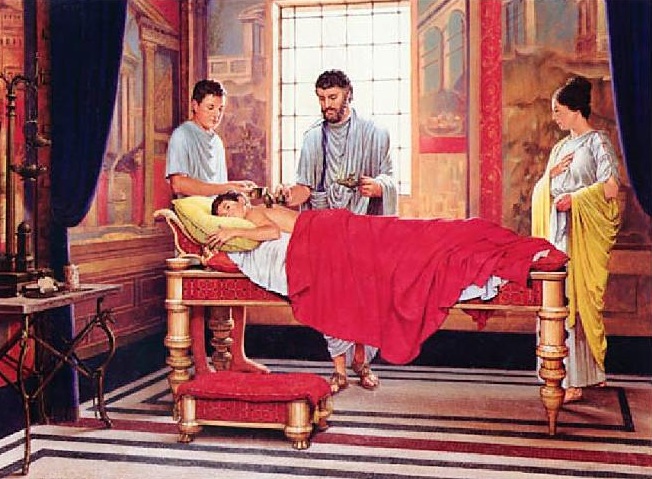
Although I suppose it's understandable why they chose otherwise, I still wish they had included medicine prior to the modern era. Hence my above image.

200 years of surgery

The NEJM is celebrating their 200th anniversary as a journal. Here is an article from the well-known surgeon Atul Gawande.

Check out the rest of their special anniversary articles.

Saturday, April 14, 2012

The fluorescent future of surgery

This has been making the rounds on the interwebs. Totally cool stuff! I don't really have much interest in surgery, but it does make me consider it a bit more than I might otherwise. Anyway, the talk is given by ENT surgeon Dr. Quyen Nguyen. Check it out below.

Friday, April 6, 2012

Atherosclerosis


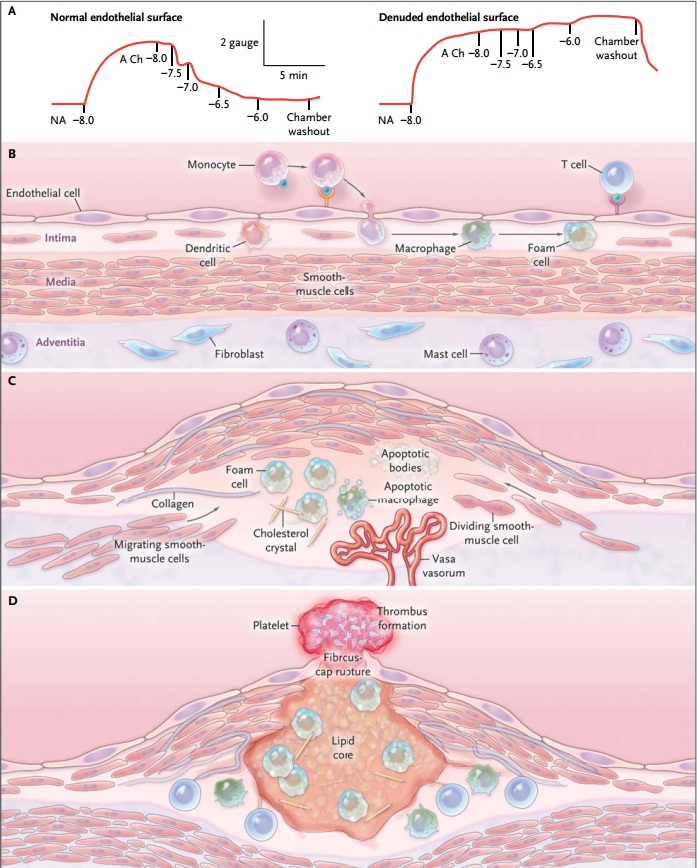
In Panel A, endothelium-derived nitric oxide was found to relax arterial smooth muscle. A rabbit aortic strip was suspended in a muscle chamber, attached to a strain gauge, and exposed to increasing molar concentrations of acetylcholine (ACh). This led to release of nitric oxide by endothelial cells that acted on smooth-muscle cells to cause vasodilation (left). The strip was then denuded of endothelial cells by mechanical rubbing, and ACh was applied in equivalent molar doses. In the absence of endothelial cells, nitric oxide was not released, leading to vasoconstriction by smooth-muscle cells (right).

Panels B through D show the stages in the development of atherosclerosis. The initial steps include adhesion of blood leukocytes to a monolayer of activated endothelial cells, migration of bound leukocytes into the intima, and maturation of monocytes into macrophages and their uptake of lipid, yielding foam cells (Panel B). Lesions progress as smooth-muscle cells migrate from the media to the intima, the resident intimal and media-derived cells proliferate, and extracellular matrix macromolecules are synthesized. Lipid, cholesterol crystals, and microvessels accumulate in the central region of the plaque, forming a necrotic core (Panel C). Thrombosis complicates physical disruption of the atherosclerotic plaque. Fracture of the cap exposes blood coagulant components to tissue factors in the plaque, triggering occlusive thrombus formation that limits blood flow (Panel D). NA denotes noradrenaline.

(source)

Causes of childhood death


(source)

The perpetual challenge of infectious diseases


(source)

Sleep deprivation

Friday, January 20, 2012

Murdered by an assassin, killed by medicine


I shudder to consider what the best medical science had to offer in the late 1800s, although I wonder what medical scientists and physicians will think of us in a hundred or so years (if the Lord has not come by then):
President James A. Garfield lay in a rodent-infested sickroom in the White House, a bullet lodged in his body. Weeks had passed since the assassin had struck, but more than a dozen doctors were struggling to save him. Day after day, summer temperatures approached 100 degrees, and mosquitoes thrived in the swamps around Washington. Four White House staff members had contracted malaria recently, as had the first lady, Lucretia Garfield. The president’s internal infections raged and spread, fevers came and went, and his heart began to weaken. He felt it most in his lower extremities—the acute neurological sensations he called “tiger’s claws,” which seized him regularly. Aides at his bedside would squeeze his feet and calves with all their might to relieve the 49-year-old president’s pain.

“Yes, I suffer some,” he told one attendant. “I suppose the tigers are coming back, but they don’t usually stay long. Don’t be alarmed, old boy!”

His three oldest children, Harry, James and Mollie, all teenagers, were taken into his room for visits, advised to do most of the talking and not to bring up anything unpleasant out of fear of aggravating their father’s condition. Doctors desperately probed Garfield’s abdomen with unsterilized tools and unwashed hands in search of the bullet, which had lodged harmlessly in soft tissue near his vertebrae. Such a gunshot wound today would require no more than a few days in the hospital. But the 20th president of the United States was spiraling rapidly and inevitably to his death—bravely and for the most part in good cheer as his physicians made one mistake after another, from nutrition to medication. . . .

The president was taken to the White House. Over the next 24 hours, more than 15 doctors stuffed their unwashed fingers into his intestinal wound, trying to locate Guiteau’s bullet and ultimately causing sepsis. They repeatedly injected him with morphine, causing the president to vomit; they next tried champagne, which only made him sicker. Joseph Lister, a British surgeon and pioneer of antiseptic surgery, had been advocating since Lincoln’s death for more sterile procedures and environments, but American doctors ridiculed him. “In order to successfully practice Mr. Lister’s Antiseptic Method,” one doctor scoffed in 1878, “it is necessary that we should believe, or act as if we believed, the atmosphere to be loaded with germs.”

As the weeks passed, Garfield’s body became engorged with pus. His face began to swell and had to be drained. Initial meals of steak, eggs and brandy were soon replaced by eggs, bouillon, milk, whiskey and opium. He lost nearly 100 pounds as his doctor’s starved him. Doctors inserted drainage tubes and continued to probe for the bullet; at one point, they brought in Alexander Graham Bell, who had invented a metal detector and thought he might be able to locate the slug by passing it over the president’s abdomen. All was for naught.

Garfield asked to be moved to a peaceful oceanfront cottage in Long Branch, New Jersey where he’d been a regular visitor over the years. Local residents, informed that the ailing president was planning to arrive in Long Branch, laid down half a mile of railroad tracks in 24 hours, so that rather than ride by horse and carriage over rough roads, the president could be taken smoothly by train, right to the cottage door. Garfield found no relief from the staggering heat, and he died in his bed in the New Jersey cottage on September 18, 1881, less than two weeks after he arrived. On the following day, the emergency tracks were torn up and the wooden ties were used to build the Garfield Tea House, which stands today. That November, Charles Guiteau stood trial for murder, was convicted and hanged the following summer. Defending himself in court, he had declared, “The doctors killed Garfield, I just shot him.”
HT: Tim Challies.

Monday, January 9, 2012

Yo-yo malpractice


According to the WSJ article: "An angiogram shows the ruined veins in pro yo-yoist Dave Schulte's index finger."

(By the way, as others have noted, looks more like arteries, no?)

Monday, January 2, 2012

The West and the rest

Why is the West is so much more successful than the rest of the world?

A significant (and probably fair) assumption is success is primarily measured in terms of economics, wealth, quality of life.

Economic historian Niall Ferguson offers an explanation which involves "six killer apps" in his TED talk: competition; the Scientific Revolution; the rule of law and representative government; modern medicine; the consumer society; and the Protestant work ethic. Further he argues other nations are adopting these "six killer apps" today, thereby making themselves successful, whereas these "apps" are degrading in Western nations. Although it remains an open question whether all six "apps" are necessary for success and whether the sequence matters (e.g. China does not have representative government but does have a strong work ethic).

This is in the vein of Victor Davis Hanson's earlier work Carnage and Culture, which in turn is a response to Jared Diamond's Guns, Germs, and Steel. If it can be reduced to a single word, Diamond's book argues the West is so much more successful because of geography. Hanson responds and argues, again if we can reduce the argument to a word, that it is not geography but culture.

By the way, Ferguson points out the economic and many other significant discrepancies between East and West Germany (prior to the end of the Cold War) and the current discrepancies between North and South Korea rule out geography as an explanation because Germany and Korea would be in the same geographic area, with similar natural resources, societies and culture, etc. Their main difference is democracy vs. communism. (Although I wonder if East Germany and North Korea don't have less natural resources and more geographic obstacles than West Germany and South Korea?)

Rodney Stark's books argue the success is fundamentally due to religion i.e. Judeo-Christianity.

Speaking for myself, at the end of the day I'd side with Stark, although there are merits to everyone's points, to varying degrees.

Showing posts with label Medicine. Show all posts

Thursday, July 27, 2017

Delta Delta Delta force, can I help ya, help ya, help ya?

A friend emails to ask:

On the transgender troops issue, would a woman who's having her period be a problem when elite forces go out on a mission?

Definitely:

  1. We can distinguish between three categories: premenstrual symptoms, premenstrual syndrome (PMS), and premenstrual dysphoric disorder (PMDD). Each subsequent category is worse than the previous category. Premenstrual symptoms occur in approximately 75%-85% of all women, PMS occurs in approximately 5%-10% of all women, and PMDD occurs in approximately 3%-5% of all women.

    PMS and especially PMDD would be particularly destabilizing for women in special forces. I think that's fairly obvious to most people. So I'll simply focus on premenstrual symptoms.

  2. Premenestrual symptoms can be physical as well as psychological or emotional. The most common physical symptoms include swollen and tender breasts, pelvic pain, abdominal pain, diarrhea or constipation, headaches (e.g. migraines), skin changes (e.g. acne), hot flashes, altered cravings (e.g. craving candy), weight gain, local or generalized aches and pains (e.g. back pain). The most common psychological or emotional symptoms include moodiness, irritability, depression, confusion, temporary mild amnesia, anxiety, malaise, fatigue, insomnia, a sense of being "out of control".

    Again, keep in mind PMS and PMDD would have worse premenstrual symptoms and/or significantly more premenstrual symptoms.

    It should be fairly obvious none of these symptoms would be beneficial as a Navy SEAL or other special forces member. What's worse, most of these symptoms could be detrimental in certain situations operating as a member of the special forces. Not only to the woman herself, but to her fellow team members.

  3. Premenstrual symptoms generally peak around age 25-30 which would coincide with the time people tend to be at their physical peak as well.

  4. A woman could attempt to treat or manage her premenstrual symptoms (e.g. oral contraceptive combinations, depot injections, oophorectomy would be very radical). These have varying degrees of effectiveness as well as varying degrees of risks, even in ones that are deemed "safe". And I'm not sure how practical or effective these would be on a mission where the woman is sleeping in the rough, crisscrossing challenging terrain, in hostile enemy territory, etc.

Friday, April 28, 2017

Miscarriages

A friend asks about miscarriages. For what it's worth, here's my response:

  1. Definitions

    a. Miscarriage is also known as spontaneous abortion. Spontaneous abortion isn't the best term because it can confuse people to think it's associated with elective abortion.

    b. Miscarriage is such a broad term. In general it refers to a pregnancy that spontaneously ends before the embryo or fetus has reached a viable gestational age. A complication is "viable gestational age" is itself a vague term susceptible to change, depending on medical science and technology. Currently that would be around the 20th week of gestation (as calculated from the date of the last menstrual period). However, it's possible future medical science and technology will alter the age of viability.

    c. Another common definition of miscarriage (such as the World Health Organization uses) is the spontaneous expulsion of an embryo or fetus weighing 500 g or less. A 500 g fetus would approximately correspond to the 20th week of gestation.

    d. Miscarriages can be subdivided into complete or incomplete miscarriages. If it's complete, then the uterus is entirely emptied, whereas if it's incomplete, then some tissue remains.

    e. One could make further distinctions such as induced (usually elective) abortions, threatened abortions, inevitable abortions, missed abortions, and tubal abortions or ectopic pregnancies.

  2. Incidence

    a. It's somewhat difficult to obtain accurate numbers (e.g. it depends how miscarriages are detected).

    b. To my knowledge, most of these studies on miscarriages are based on tests measuring β-hCG. However, measuring β-hCG has its limitations. Other tests measure other factors like early pregnancy factor (EPF), but these tests have their limitations too.

    c. The popular belief is the incidence of spontaneous abortion is ~50%. To my knowledge, that's only the case when preimplantation losses are factored in. An extremely pertinent question to ask is, what is the exact nature of these preimplantations? Specifically, how many are viable zygotes/embryos? Unfortunately this is a highly politicized question to ask, but my own research suggests the majority are not viable zygotes/embryos.

    d. What then is the incidence of spontaneous abortions or miscarriages? Estimates range from 8-20% of all clinically recognized pregnancies under 20 weeks. The incidence is significantly lower at 5% among women who have previously had a child. The incidence of spontaneous abortion is higher at 13-26% if we include unrecognized or subclinical pregnancies. (Sources: here, here, here, here, here.)

    e. Finally these figures appear to be largely based on fertilized oocytes. Fertilized oocytes are not necessarily equivalent to what pro-lifers mean when they argue life begins at conception. For one thing, a fertilized oocyte is not necessarily a viable zygote/embryo. Not all fertilized oocytes are chromosomally or structurally normal.

  3. Etiology

    a. The most common cause of spontaneous abortions is most likely due to genetic abnormalities in the embryo or fetus. This is thought to account for ~75% of all spontaneous abortions. The most common genetic abnormalities are autosomal trisomies (50% of all genetic abnormalities). And trisomy 16 (which is 100% lethal) is the most common of the trisomies.

    b. Other causes of spontaneous abortions (~25%) are infections, autoimmune diseases, endocrine issues, uterine issues, and drug or substance abuse.

  4. Risk factors

    The biggest risk factors for spontaneous abortions are: advanced maternal age, previous spontaneous abortion, and maternal smoking (10 cigarettes per day or more).

    It may come as no surprise that Western societies have a significantly increased risk for spontaneous abortion primarily due to advanced maternal age.

  5. Fertilization/conception

    a. I think it's worth noting an important distinction: fertilization is not identical to conception and vice versa. Fertilization occurs when the sperm enters or penetrates the oocyte (later ovum) or egg. Conception occurs when the sperm and egg cease to exist as sperm and egg in order to become a zygote which has its own unique genetic material and which has its own unique behavior.

    b. I think it's possible to argue human life begins either at fertilization or conception. I see merits to both. It's arguable we should play it safe and err on the side of fertilization. I'd argue conception (syngamy) is certainly the latest it could be.

    c. I realize many or most state the sperm and egg fuse, unite, or the like. That's fine as far as it goes, and I don't object to the terminology. However, at certain times it could be misleading language, scientifically speaking. More on this below.

    d. After the sperm has entered the egg, but prior to the creation of the zygote, the sperm and egg duplicate their respective genetic information in becoming paternal pronuclei and maternal pronuclei. The two pronuclei line up and move toward one another within the egg, their nucleic membranes dissolve (not fuse), and the chromosomes pair up to eventually become a new human genome.

    e. Overall it takes approximately 12-18 hours after fertilization for the zygote appear.

  6. References

    Beckmann, C. Obstetrics and Gynecology (2009). (6th ed.).
    Cunnigham et al. (2014). Williams Obstetrics (24th ed.).
    Mularz, A., Dalati, S., & Pedigo, R. (eds.). (2016). OB/GYN Secrets (4th ed.).
    Tulandi, T., & Al-Forzan, H.M. (2017). "Spontaneous abortion: Risk factors, etiology, clinical manifestations, and diagnostic evaluation". In D. Levine, R. Barbieri, & K. Eckler (eds.), UpToDate. Retrieved April 28, 2017, from https://www.uptodate.com/contents/spontaneous-abortion-risk-factors-etiology-clinical-manifestations-and-diagnostic-evaluation

Tuesday, November 1, 2016

Spontaneous remission

Just a few (preliminary) thoughts about "spontaneous remission" in the context of cancer:

  1. A side note regarding terminology:

    a. The term "spontaneous" isn't used only in cancer, but applied to other diseases or pathologies as well. For example, spontaneous mutations, spontaneous abortions, spontaneous pneumothorax, some leprosy (tuberculoid) patients often spontaneously recover, etc. There seems to be a degree of indiscrimination in the use of the term "spontaneous".

    b. Focusing on cancer, I've seen and heard physicians use both "spontaneous regression" as well as "spontaneous remission". Likewise that's what I read in the relevant medical literature. If I had to pick, I'd say I see "spontaneous regression" more often used. However, I'm not sure if there's meant to be a significant distinction between the two or if they're both interchangeable. Perhaps "remission" is meant to suggest permanency in a way "regression" is not? In any case, I don't see how one term makes an important enough difference over the other, but it could be I'm missing some subtleties or nuances.

  2. A few complications which make it more difficult to address spontaneous regression cases:

    a. I think one of the main complications is simply that cancer isn't a single disease. It's a collection of many diseases. What ties them all together into "cancer" is mutations in DNA which lead to a cell growing out of control. There's a plethora of possible mutations which cause cancer. It's not at all uncommon to see 100 mutated genes in a single tumor.

    b. Another major complication is cancer cells are adaptive. Cancer cells can adapt to drugs such as chemotherapies and become resistant to these drugs, similar to bacteria becoming antibiotic resistant.

    c. The last big complication is cancer needs a receptive environment in which to thrive. For example, I've read some people have molecular and cellular changes which are characteristic of leukemia, but they don't have leukemia. That seems to be because the environment of their bodies wasn't receptive to developing leukemia.

  3. Keeping the above complications in mind:

    a. Spontaneous regression can depend on the kind of cancer one has. Spontaneous regression is known to happen in some cancers far more frequently than others (e.g. as many as one-third of low grade lymphomas are known to spontaneously regress without any treatment).

    b. At the same time, it can depend on the patient. That's because it's thought spontaneous regression is most likely an immune phenomenon (i.e. related to immune checkpoint inhibition; cf. PD-1/PD-L1). Our immune system is able to distinguish between friend and foe. Yet cancers can mask themselves as friends when they're really foes, thereby circumventing our immune system. However, it seems some people's immune systems can aid the environment of their bodies, making it less congenial to developing some cancers. (Hence much of the future of cancer therapies is focused on changing the body's environment to make it inhospitable to developing cancer.)

  4. I think all this is actually helpful to know:

    a. For one thing, if some cancers are known to have extremely low spontaneous regression or remission rates, then, if, say, someone prayed over a patient with a cancer with extremely low rates, and their cancer spontaneously regressed, then it'd seem to have the backing of scientific evidence that this type of cancer is highly unlikely to spontaneously regress or remit.

    b. Of course, God could use means by which to spontaneously regress or remit cancers. For example, perhaps prayer "activated" or "deactivated" something in someone's immune system for them to spontaneously regress or remit the cancer. So prayer healing cancer and a known mechanism for spontaneous regression are not necessarily mutually exclusive.

  5. I don't know what kind of cancer Joy Davidman had. I've read she had some sort of bone cancer that metastasized to her breast.

    I'm not sure if the breast metastasis was in her initial diagnosis or if it came later when she finally succumbed to it.

    If her bone cancer had already metastasized to her breast in her initial presentation, then I'd guess it'd be highly unlikely to go into remission. Of course, I'm no oncologist, but given how rare bone cancers are in adults (metastasis to the bones are way more common), given her bone cancer metastasized to her breast, and given back in the 1950s they didn't have a whole lot of the understanding about cancer and how to treat it like we do today (e.g. Watson and Crick had just discovered the structure of DNA in 1953 and cancer is fundamentally a molecular and cellular disease), that's my working assumption.

    If all this is so, then the fact that it did go into remission after prayer should be deemed "miraculous".

Friday, October 14, 2016

A Columbian exchange

A friend ponders:

Today I was reading some entries in The Oxford Companion to Archaeology. Among other things, I read about how the conquistadors were successful in part because the Aztecs and Maya were decimated by smallpox. The conquistadors unwittingly introduced smallpox into the indigenous populations, which had no resistance to the foreign pathogen. Fortuitous biowarfare. That, along with other factors (e.g. superior tactics and technology), enabled them to subdue these warrior civilizations, even though the conquistadors were vastly outnumbered by hostile natives.

This isn't the first time I've read that explanation. But I have some questions:

i) To begin with, why wouldn't that be a two-way street? If the conquistadors were carriers, for which the natives had no resistance–why weren't the natives carriers, for which the conquistadors had no resistance?

ii) According to the CDE, the incubation period for smallpox is between 7-17 days, during which an infected person is asymptomatic and not contagious.

So a sailor would have to become infected before he boarded a ship in Spain. And that would have to be during the incubation period, when he was still asymptomatic. I take it for granted that the captain and crew would not permit a sailor with smallpox symptoms to board the ship. So his symptoms would have to develop at sea, at which point he becomes contagious.

iii) We have to compare that with the time it took ships to sail from Europe to the Americas. Here are two estimates:

Since ships in the 1700s relied on sails to propel them, the length of the voyage greatly depended on the wind. An immigrant who made the journey in 1750 reported that it could take between eight and 12 weeks, while another who arrived in 1724 reported that the journey took six weeks and three days. The average journey was about seven weeks. (Source)

Henry Hudson was a European explorer traveling across the Atlantic during the colonial period. It took Hudson more than two months to sail from Amsterdam to New York City on his sailing ship, the Half Moon. (Source)

Assuming that's accurate, an infected sailor would become visibly symptomatic and contagious during the transatlantic passage. Assuming the crew didn't chuck him overboard, wouldn't there be a raging epidemic onboard by the time the ship docked in Mexico? But from what I've read, the conquistadors were asymptomatic when they disembarked. Moreover, I haven't read reports of conquistadors developing smallpox days or weeks after their arrival. Admittedly, my knowledge of the topic is quite cursory.

Just my thoughts:

I. A two way street

I agree it was a two way street. Native Americans (presumably including the Aztecs and Mayans) did likewise transmit diseases to Europeans (presumably including the conquistadors). For example, it's thought syphilis was likely transmitted from the New World to the Old World (on the Columbian theory). And before antibiotics syphillis could be quite harmful and sometimes even fatal.

There are other diseases Native Americans transmitted to Europeans, though I don't know if these were specifically from the Aztecs or Mayans (e.g. a species of hookworm; Chagas; Rocky Mountain Fever, though this was discovered much later than the 1500s).

II. Smallpox

Some facts about smallpox:

  1. Smallpox is a very large and complex virus. An ancient virus, from the dawn of civilization.

  2. Smallpox is thought to have originated from a domesticated animal, but it doesn't (or no longer can) infect any domesticated or any other animal. That is, there are no animal reservoirs which harbor smallpox. Smallpox only infects humans.

  3. There are actually two main types of smallpox: major and minor. Historically, smallpox major has a high mortality rate (30%), while smallpox minor a much lower one (1%). We could actually subdivide further, but it's not really all that relevant.

    However, I don't know the answer to this, but I wonder if minor existed at this time, and if so, if being infected with minor and surviving grants immunity to major?

  4. Smallpox is primarily transmitted either by droplets up to 3-6 feet (e.g. sneezing) or aerosols which travel farther than droplets and remain suspended in the air for longer periods of time (e.g. coughing). It's highly contagious, though there are other diseases which are more contagious.

    For example, if we compare by herd immunity, measles require upwards of 90-95% of a community to be vaccinated in order to keep measles from spreading to the unvaccinated in a community. However, with smallpox, about 80% of a community needs to be vaccinated in order to keep smallpox from spreading to the unvaccinated in a community. Still high, but not as high as measles.

  5. The average incubation period for smallpox is 10-12 days (range is usually from 7-17 days). The course of smallpox can vary, but usually symptoms will subside 14 days after onset. But (assuming the person survives) it takes another 7-14 days for the scabs to fall off. A person is considered no longer contagious until all their scabs have fallen off. Say for example: 10 days incubation period + 14 days symptoms to subside + 14 days for scabs to fall off = 38 days.

    In case anyone would like a bit more detail (though I could go in more depth than even here). After the incubation period, the patient will experience an acute onset of general signs and symptoms lasting 2-3 days (e.g. fevers, chills, rigors, malaise, aches and pains, nausea and vomiting). After these 2-3 days, the patient will develop a centrifugally distributed rash with lesions usually involving the face and extremities. Over the next 7-8 days, these lesions typically generalize across the entire body, and evolve through various stages (i.e. macular, papular, vesicular, pustular). Within a month or so, the patient will have either improved or not, but even if they improve a lot of complications may persist (e.g. permanent scarring, blindness, arthritis, infection with other opportunistic pathogens like pneumonia).

  6. Smallpox doesn't have a latent state. It doesn't hide as an asymptomatic infection. There's no carrier state for smallpox. Smallpox will produce overt signs (e.g. rash, lesions). (As an aside, this is one reason smallpox was able to be "eradicated".)

  7. If a person is infected with smallpox, but doesn't die, instead recovers, then (generally speaking) they should have lifelong immunity.

  8. As far as anyone is aware, smallpox has been "eradicated". I think the last known case was back in the 1970s. The only official specimens are in the CDC and I believe somewhere in Russia (though it's known the Soviet Union did attempt to weaponize smallpox in the past).

    Of course, who knows if terrorists or other nefarious groups have acquired smallpox which they could weaponize? After all, at one point, there were a lot of labs around the world which had smallpox since there was a lot of research on it. They should have destroyed all the smallpox in their possession, but did everyone do so?

III. Musings and speculations

Given all this:

  1. I suppose the straightforward answer (or one straightforward answer) could be if the conquistadors had already been exposed to smallpox in Spain or Europe and survived, then traveled to the New World to infect the Native Americans.

  2. People like Jared Diamond and Alfred Crosby talk about human contact with animals (especially domesticated animals) in the Old World vs. New World since animals can be reservoirs for infectious diseases. Specifically, living in close proximity to more varieties of animals might be relevant in building a more robust immune system among Europeans like the Spanish in contrast to Native Americans like the Aztecs and Mayans. However, it's debatable, I think.

    More to the point, since smallpox doesn't have an animal reservoir, since smallpox only infects humans, thus humans are its only reservoir, I'm not entirely sure how arguments from Diamond and Crosby would be relevant to smallpox, except indirectly at best, even if they are relevant to other communicable diseases?

  3. I believe people like Diamond and Crosby also talk about how much more dense European population centers were at the time in comparison to Native American population centers, where only a city like Tenochtitlan would've rivaled Europe. A more dense population center may mean more likelihood of exposure to various pathogens, which in turn could perhaps account for more robust immune systems among Europeans in contrast to Native Americans. That might be worth exploring as well, but again it seems to me it's a debatable topic.

  4. Generally speaking, it's possible the immune systems of Aztecs and Mayans are less genetically heterogeneous to one another than the immune systems of the Spanish to other Europeans. Perhaps especially if we accept the Bering strait theory that Native Americans trace their ancestry back to those groups which crossed the Bering strait.

    Anyway, if the Aztecs and Mayans have more genetically similar immune systems to other Native Americans than the Spanish do to other Europeans (say if the immune systems of all Native Americans are 50% identical, while the immune systems of all Europeans are 10% identical, just to use completely made-up figures), then it's possible a pathogen like smallpox could wreak havoc among Native Americans more easily if the pathogen can take advantage of something in the more similar immune systems, whereas the Spanish could more likely resist it.

    However, once again, I think this is debatable. It could just as well be entirely mistaken.

  5. Another consideration is the climate and environment in which infectious diseases tend to thrive and spread. Say Mesoamerica vs. the Spanish peninsula. Was there anything about each environment that made it more likely for certain diseases to thrive and spread? Or which inhibited them from thriving and spreading? Or say temperate climates vs. tropical or sub-tropical climates? And so on.

  6. Quite interestingly, historian Suzanne Alchon argues the following in her book A Pest in the Land: New World Epidemics in a Global Perspective (emphasis mine):

    This study of disease among the native peoples of the New World before and after 1492 challenges many widely held notions about encounters between European and native peoples. Whereas many late twentieth century scholars blamed the catastrophic decline of postconquest native populations on the introduction of previously unknown infections from the Old World, Alchon argues that the experiences of native peoples in the New World closely resembled those of other human populations. Exposure to lethal new infections resulted in rates of morbidity and mortality among native Americans comparable to those found among Old World populations.

    Why then did native American populations decline by 75 to 90 percent in the century following contact with Europeans? Why did these populations fail to recover, in contrast to those of Africa, Asia, and Europe? Alchon points to the practices of European colonialism. Warfare and slavery increased mortality, and forced migrations undermined social, political, and economic institutions.

    This timely study effectively overturns the notion of New World exceptionalism. By showing that native Americans were not uniquely affected by European diseases, Alchon also undercuts the stereotypical notion of the Americas as a new Eden, free of disease and violence until the intrusion of germ-laden, rapacious Europeans.

  7. Along similar lines, it might be useful to look at, say, contemporary tribes in places like South America or Asia (e.g. Papua New Guinea) which have been isolated from contact by civilized societies. I presume anthropologists, for example, would take care to vaccinate themselves against known native diseases, so in the case of modern tribes it might not be a two way street like it was in the past. However, would anthropologists risk bringing their own diseases to some of these tribes if they make contact with these tribes? I suppose they take care to mitigate this possibility with good hygiene, minimal contact, etc. But still the possibility is there.

    Or if these isolated tribes happened upon people from their surrounding modern society. Suppose an Amazonian tribe happening upon Brazilians without any prior warning or other preparation by either side. Would there be any relevant parallels between something like this and the Columbian exchange of disease which we could learn from?

  8. By the way, I suppose if liberal violent PETA types had their way, perhaps smallpox would now be on an endangered species list, and in fact they may even try to spread it! I hope this is just an overly active imagination on my part.

IV. "Genocide"

  1. I've also read (mostly from liberals) how Europeans brought smallpox and other diseases to the New World, thereby causing a "genocide" among Native Americans. I think the term "genocide" is a highly loaded term, to say the least.

    For one thing, did all Europeans in general intentionally give diseases to Native Americans with the goal of wiping out an entire peoples or population? Wasn't the situation far more complex? At the bare minimum, we need to make distinctions between different Europeans and different Native Americans. Perhaps there were some Europeans who did so, but we can't generalize from some to all (e.g. there were some Europeans who helped some Native Americans get inoculated).

    Take this example. I've read there's some debate over some Englishmen giving blankets infected with smallpox to Native Americans in order to kill them. If true, then this would indeed have been a vile and reprehensible act, worthy of all condemnation. Regardless, let's assume it is true - can we therefore conclude all English colonials did the same to all Native Americans whom they encountered?

  2. I've read some people argue as much as 90% of the New World population was destroyed thanks to disease brought by Europeans. Where does this figure come from? How is it calculated?

    For example, is it based on some epidemics (e.g. the cocoliztli epidemics), which, let us say, killed 90% of the Native Americans, then extrapolated to all other Native American communities or populations?

  3. A couple of Mesoamerican epidemics in the 1500s, which killed millions, were caused by what the natives called "cocoliztli". There's debate over what cocoliztli was. Was it smallpox? Was it measles? Was it some unknown disease? Did it originate from the Old World or the New World?

    I've read some argue cocoliztli was a disease indigenous to the New World rather than transmitted by Europeans. For example, see here.

    I haven't deeply looked into any of this, so I don't know.

    However, if cocoliztli was indigenous to the Americas, then it would undercut the idea that it was the European diseases alone which were responsible for the alleged "genocide" of Native Americans. Especially if cocoliztli was not smallpox.

  4. Likewise, from the same article:

    In the 1530s, a band of Spanish adventurers conquered the Inca Empire. It is commonly believed that some kind of epidemic devastated the Andes immediately prior to the Spanish arrival. Noble D Cook has advanced much evidence and argued strongly that this epidemic was of Old World origin, perhaps measles combined with pneumonic plague and influenza.46 However, if our hypothesis for the Mexican case - that some pre-existing New World viral disease became epidemic due to ecological changes brought about by large-scale and relatively sudden alterations of human agricultural practices - is valid, then perhaps the Peruvian case merits further study along these lines.

  5. Perhaps one reason smallpox so easily spread across Mesoamerica (and other parts of the New World) was due to the collapse of social order among the Aztecs and Mayans? I presume the Aztecs and Mayans faced disease epidemics in the past since most civilizations seem to have. If so, they would've presumably been better able to isolate and stem epidemics. Like leaders to take charge and organize, quarantine the infected, etc.

  6. I've read some Native American populations didn't suffer as badly from some Old World diseases as Europeans did (e.g. the Quechua people in the Andes Mountains and malaria, due to their consuming tea from leaves containing quinine, which helps mitigate malaria). Point being, it seems more complex than simply saying, all Native Americans suffered from disease at the hands of Europeans.

  7. Of course, it's not only the Europeans who brought disease. For example, it's possible African slaves brought yellow fever to the New World. Although, if true, no doubt some would still like to blame Europeans for bringing the slaves. But that would be overly simplistic to do.

  8. Speaking of which, since the Europeans were planting colonies all around the world at this time, there were a lot of communicable diseases between Europe, Africa, and Asia too. Many which killed scores of people in Africa and Asia (e.g. re-occurences of the black death in northern Africa). I wonder if any of them were as catastrophic as what happened to Native Americans?

Sunday, April 24, 2016

DSM-5

Just a word or two about the DSM:

1. The DSM is touted way too much by LGBT supporters. The DSM was meant to be a guide for psychiatrists and other medical professionals, not the Bible or gospel truth or anything like that.

2. The DSM is published by the American Psychiatric Association (APA). As such, it doesn't necessarily mean other nations like the UK, Canada, Australia, and New Zealand will follow the DSM to the letter. It's not as if psychiatrists in these other nations genuflect to whatever the APA says is true.

For example, here's what an Australian psychiatrist has said:

Studies show 50 per cent of western populations would now be diagnosed with a mental disorder under DSM-5, says Professor Gordon Parker, the founder of Black Dog Institute and a University of New South Wales Scientia Professor of Psychiatry. "For 50 per cent of the population to now be regarded as having a psychiatric condition strikes me as straining credulity," Parker said at a recent media briefing.

3. Also, even within the US, there's considerable dissent from the most recent update to the DSM - i.e. the DSM-5. For instance, the National Institute of Mental Health (NIMH), which falls under the National Institutes of Health (NIH), has said and done the following:

[T]he NIMH did not waver from its initial ruling that it would no longer use diagnoses listed in the DSM for its' funded studies.

NIMH director Thomas Insel wrote in a statement earlier in May that the NIMH felt the proposed definitions for psychiatric disorders were too broad and ignore smaller disorders that were lumped in with a larger diagnosis.

"The weakness is its lack of validity. Unlike our definitions of ischemic heart disease, lymphoma, or AIDS, the DSM diagnoses are based on a consensus about clusters of clinical symptoms, not any objective laboratory measure. In the rest of medicine, this would be equivalent to creating diagnostic systems based on the nature of chest pain or the quality of fever," Insel said.

The bottom line is there's debate over the DSM-5 even among secular psychiatrists and other relevant scholars and professionals.

4. What's more, I recently read someone claim: "The psychiatric and psychological professions have long since removed gender dysphoria from the DSM."

a. That's just flat out wrong. I have a copy of the DSM-5 in front of me. There's an entire section on "gender dysphoria." See Section II: Diagnostic Criteria and Codes.

b. Besides, just because the DSM doesn't classify something as a mental illness doesn't mean it's not a mental illness. Or just because something isn't in the DSM doesn't therefore mean it doesn't exist. If a mathematics textbook failed to include a mathematical truth, it doesn't mean this mathematical truth doesn't exist.

c. To say there's no such thing as gender dysphoria or to imply that gender dysphoria isn't an illness is actually something that many LGBT advocates would disagree with because that's how they'd justify having sexual reassignment surgery, hormonal treatment to turn them into the gender they feel they truly are, etc.

Thursday, November 12, 2015

Veterans Affairs

Hillary Clinton recently said the following about the privatization of the VA:

Privatization is a betrayal, plain and simple, and I’m not going to let it happen.

I haven't paid any attention to talk about the VA so I might be wrong in what I'll have to say. But for what it's worth:

1. I presume the talk of privatization of the VA system is mainly due to its huge cost to our national budget. Not to mention many if not most VA hospitals and related medical facilities are very poorly run and would require tremendous reform.

2. What's wrong with having some key military hospitals, medical facilities, clinics, as well as military med schools, etc., and then privatizing the rest? Why does Hillary take such a black-and-white or all-or-nothing stance?

3. Sure, we have arguably the best military medicine in the world (e.g. trauma, aviation). But this isn't necessarily translated into VA hospitals. Also, having the best military medicine doesn't mean VA hospitals provide the best medical care in other specialties (e.g. psychiatry, oncology, family medicine, pediatrics, OB/GYN).

4. Ideally it'd make the most sense for anyone to have the choice to go any doctor or hospital they want. This includes our soldiers. Why can't people choose which hospital they want to get treated at? Whether a VA hospital or private hospital or other hospital?

Monday, October 12, 2015

NHS: your health, our choices

I recall Michael Moore interviewing a UK physician in his "documentary" Sicko, and using the UK physician as a representative example that doctors do quite well under (in Moore's words) a "state control[led]" health care system - i.e. the UK's National Health Service (NHS):

Similarly, Danny Boyle included in the 2012 London Olympics a tremendous tribute to the UK's NHS:

But what do UK physicians who have worked or work in the NHS think about the NHS today? How fares the much lauded "state control[led]" NHS?

For instance:

A report commissioned by the Department of Health found the number of young doctors set to qualify as top-level consultants could increase by as much as 60 per cent.

This, it predicted, would take number of consultants to more than 60,000 by 2020, without guaranteed suitable jobs for all of them to move into.

The study, by the Centre for Workforce Intelligence, revealed NHS England’s salary bill would rise by £2.2bn before inflation if the future doctors were paid at the same rate as those currently.

The service is already attempting to meet a £40bn savings target, prompting suggestions new consultants could be asked take roles with lower salaries.

(Source)

Specialist recruitment agencies and GPs’ leaders say doctors, many of whom have just finished their training, are becoming disillusioned with the state of their profession and seeking fresh starts in countries such as Australia, where they can earn double what they are paid in Britain. Figures given to the Observer by the General Medical Council show that an average of 2,852 certificates enabling British doctors to work abroad were issued annually between 2008 and 2014 – a total of 19,522.

...He added that a number of factors were prompting British doctors to consider moving abroad. One was anger at the overly bureaucratic revalidation process, in which all doctors regularly undergo a series of checks so that they can retain their licence to practise.

Another was the issue of medical indemnity insurance, which Hazel said costs between six and 12 times more in the UK for a GP than in Australia. “While this cost is ‘covered’ by the NHS for salaried GPs, freelance GPs would need to cover this themselves,” Hazel explained. “A full-time GP can expect to pay between £5,000 to £12,000 for insurance, whereas in Australia they would pay under A$2,000 (£1,000). And the Australian insurance policy covers much more in terms of procedures than a UK policy.”

...Changes to the way in which British GPs will be expected to work is another push factor. “I have 40 positions in all the major capital cities in Australia for GPs, all earning around £160,000 with no out-of-hours work,” Hazel said. “The NHS offers a salaried GP around £80,000.”

...“GPs face increasingly challenging and stressful work environments, due to a combination of increasing demand and falling resources,” said Dr Richard Vautrey, deputy chair of the British Medical Association’s GP committee. “The result has been fewer junior doctors choosing general practice as a career, more senior GPs choosing to retire early and more doctors choosing to work abroad.” This has contributed to a workforce crisis and means existing doctors are struggling to meet the needs of the rising number of patients walking through their surgery doors. To stem this problem we urgently need to address issues around workload pressures, resourcing and work-life balance.”

...“In my practice we feel we are stuck in a hamster wheel. I see around 50 or 60 people a day on my on-call day. It’s very difficult to do that in a sustained fashion without getting really fatigued. I don’t want to be a tired and grumpy doctor. I want to be the kind of doctor who enjoys what they are doing, but sometimes you can’t do that because you’re too tired.

...“The workload is going up at a rate of knots. We have 8,000 patients at our practice. We used to do 24,000 consultancies a year; now it’s 50,000. Once, if you had a cold, a family member would give you advice. Now people don’t know who to ask, don’t seem to be resilient enough to cope themselves.

(Source)

Junior doctors’ pay has fallen in real terms by 25 per cent since 2009...

@Collins Lab

Of course it’s about money. Are you telling me my services as a doctor are worth 40 per cent less than I’m being paid, and that I should be working significantly more hours? It’s all good and well to claim that doctors should work for the principle of doing good, but are you suggesting we shouldn’t be remunerated for our compassion and hard work? For having to make impossible decisions any time of day or night, and still bring a smile and fresh mind to our next patient?

You speak as if working 90 hours a week is something every person in the country does. When divided by the actual hours a week I work, my salary barely come above the minimum wage.

The fact is, if you pay peanuts you’ll get monkeys. And when you treat highly trained, professional people as monkeys, they have a right to stand up and remind you just how far from the zoo they really are.

@Doctor A S

Yes, Mary Dejevsky, it is sometimes about the money. As doctors we are not expecting bankers’ salaries or anything similar to those in the private sector. What I do expect after eight years in the NHS at 32 years old is to be earning more than a manager of a fast-food chain.

Why should doctors not just work for the job satisfaction, you say? Because we are human beings too, who have lives, mortgages, families. I invite you, Mary, to come and join me on a 13-hour labour ward shift where there is often no time to eat, drink or pass urine. Where your actions can have implications on the outcome of a birth for a mother and a baby. Once you have done that you can tell me if I am worth my £47,000. By the way, that is the whole pay with the extra hours.

@KengaS

A junior doctor is a term that’s poorly understood among the public. A junior doctor is anyone who has completed his or her medical degree but is not yet a consultant. The Centre for Workforce Intelligence says it takes a median 15 years from finishing medical school to become a consultant.

Among the issues exercising junior doctors are the change of hours and the way they are remunerated. Currently, “plain time” is 7am to 7pm, Monday and Friday. Any hours a junior doctor is rostered to work beyond 7pm on a weekday, and any hours on a weekend, are paid at a small premium. This is anything from 20 per cent to 50 per cent of the plain time rate depending on the intensity of the workload. The new contract stipulates that plain time will now extend to Saturday and from 7am to 10pm. This means an extra 30 hours a week will be considered plain time, rather than unsocial hours. I do not agree that working beyond 7pm on Monday to Friday and also on a Saturday (all day) is plain time.

These are unsocial hours and should be remunerated as such. No doctor is unwilling to work these hours – but we often have to sacrifice much of our personal lives for our job and there should be some level of recognition for this. Junior doctors often have to work 12 days in a row, and some will be 12-hour shifts.

In 2003, the Government sought to accelerate junior doctor training by creating a more structured programme; it also agreed to the EWTD [European Working Time Directive] to reduce working hours to a maximum of 48 hours by 2009. To ensure this would happen, NHS Trusts faced financial penalties for introducing unsafe working rotas and were required to pay doctors overtime.

The new contract removes many of the contractual safeguards protecting junior doctors from working excessive hours. For instance, junior doctors are entitled to one 30-minute break for every four hours they work, but the new contract stipulates that doctors will only be entitled to one 20-minute break in a shift of up to 11 hours. Jeremy Hunt is right to say he wants to ensure there are fewer deaths in hospital, but a tired, hungry and demoralised doctor is hardly the correct prescription.

Changes to the pay progression rules will penalise doctors who are taking time out of their regular training to contribute to research in medicine, carry out humanitarian work or have a family. Creating disincentives for taking time out of training risks undermining the potential to create the clinical leaders of tomorrow.

We are keen to return to negotiations. However, junior doctors agree with the BMA that we need concrete assurances before this can happen. These include the following:

* Proper recognition of unsocial hours as premium time;

* No disadvantage for those working antisocial hours compared with today’s system;

* No disadvantage for those working less than full-time and taking parental leave/research time compared with the current system;

* Pay for all work done

* Proper hours safeguards to protect patients and their doctors.

There is also a risk that these changes could drive younger doctors to seek more favourable working conditions in countries such as Australia and Canada. About one in four of my junior trainees have made such a decision.

This dispute is not solely about remuneration. This proposed contract has real potential to create an unsafe working environment for doctors, the wider healthcare team and patients.

(Source)

Thursday, July 2, 2015

Wednesday, June 24, 2015

Political correctness run amok?

I just saw this article about a physician (anesthesiologist) who "trashes a sedated patient - and it ends up costing her":

1. It wasn't only the anesthesiologist who did this. It was several people in the surgical team including another physician - i.e. the gastroenterologist.

2. True, this was rude talk by the surgical team including physicians. It also shows their lack of judgment.

3. That said, I wonder why the gastroenterologist (let alone other medical staff) wasn't likewise penalized since he too made similar remarks about the patient? Instead, he was "dismissed from the case." I guess he has a really good lawyer!

4. Or, maybe more likely, he was the patient's personal physician, has a good rapport with his patient, and apologized to the patient. Whereas most patients have no idea who their anesthesiologist is. It's probably easier for most people to sue an anonymous person than someone the person knows.

5. I don't buy the explanation in the article that the patient recorded the conversation "to capture the instructions his doctor would give him after the procedure." That's because the instructions are hardly instructions at all. The instructions before a procedure would be something like: just close your eyes, breathe in the anesthetic, and fall asleep. The instructions after a procedure would be something like: open your eyes, relax, rest. Why would anyone need to record these sorts of instructions?

6. I could be mistaken, but I thought legally people (including patients and physicians) are prohibited from recording conversations without obtaining written informed consent.

Indeed, the patient wasn't even part of the conversation, yet he recorded it presumably without other parties' informed consent. This sounds amiss to me, but then again I'm no lawyer.

The article notes Virginia (where this incident occurred) is a "'one-party consent' state, meaning that only one person involved in a conversation need agree to the recording." But would any of the doctors or nurses agreed to have the conversation recorded?

Or is this somehow suggesting only the patient needs to "consent" to his own recording? If so, then this seems quite unfair to the people being recorded! (I'm looking at you, NSA! Just kidding.)

7. By the way, putting legality aside, I'm not suggesting it's always unethical to secretly record a conversation. It could be the patient had a justifiable reason to secretly record the conversation. Although the article doesn't tell what the reason would be in this case.

However, imagine how the media would've liked to see this play out if a doctor was caught secretly recording a patient, even if the doctor had a justifiable reason to do so.

8. All that said, the patient was awarded $500k and the doctor lost her job. Granted, I don't know how the law works, but this seems to be out of proportion to the remarks made and "distress" caused to the patient. I would've instead expected at most something like a few thousand dollars, free counseling sessions for the patient, maybe the state medical board reprimanding the physicians.

9. I suppose the main lesson is doctors always need to tread very carefully. Always watch what they say and do. Always be on guard. Never say stuff like a patient is fat and needs to lose weight, in case it comes back to haunt the doctor! In short, be afraid to speak your mind, otherwise risk getting sued. I suppose this is the price of living in a society which kowtows to political correctness. Where coarse and inappropriate talk may be mistaken for slander or defamation. Where surveillance is ubiquitous.

Tuesday, June 23, 2015

Roof and Suboxone

I've read reports indicating the mass murderer Dylann Roof "may" have been on Suboxone. He may not have been, but let's say he was or is on Suboxone. If so, to my knowledge:

1. Suboxone is primarily used to treat people with opioid addiction. Addiction to opioids like morphine or heroin. Basically, Suboxone reduces the craving for opioids and it reduces withdrawal symptoms.

2. Suboxone is a fairly mild and safe drug (unlike say methadone which is a standard treatment for addiction to opioids like heroin and which needs to be very closely monitored).

In fact, Suboxone isn't generally even used as initial treatment to come off of opioid addiction, although perhaps it can be, but rather it's normally used to maintain the treatment once the initial treatment is successful.

Not to mention Suboxone isn't strong or powerful enough to be used in people who need high maintenance doses. It's generally used in people who require mild to maybe moderate maintenance doses.

3. I think there are basically two possibilities: the Suboxone was working, or the Suboxone wasn't working.

a. If the Suboxone was working, then I can't see how Roof's use of Suboxone would make him less culpable. If anything, if the Suboxone is working, then Dylann should feel more settled or stable in mind. More like a normal person.

b. If the Suboxone wasn't working, or not working well enough, then there could be side effects. However, even still, the side effects are not normally mind-altering effects.

The main side effects are mainly constipation, upset stomach, nausea and vomiting, lower blood pressure, headaches, dizziness, sleepiness or drowsiness, mild agitation.

Also, Suboxone itself can be addictive, but certainly far less addictive than the opioids it's meant to counter (e.g. morphine, heroin).

4. However, Suboxone is not a street drug, I don't think. Junkies would prefer something much stronger like heroin. Suboxone is relatively expensive for the average person (was Roof insured?) and requires a prescription. How would Roof have acquired Suboxone in the first place?

Friday, September 5, 2014

Monday, August 25, 2014

Ectopic pregnancy

For what it's worth, if anything, here are some of my thoughts on the topic of ectopic pregnancy:

  1. Keep in mind I'm a mere med student, not a physician, let alone an OB/GYN. I'm open to correction on the medical science and other related data.

  2. The vast majority of ectopic pregnancies are tubal ectopic pregnancies. Specifically, 95-98% of all ectopic pregnancies are tubal ectopic pregnancies. This simply means they're in one of the Fallopian aka uterine tubes.

    Other types of ectopic pregnancies are far less common (e.g. ovarian, cervical, abdominal).

  3. My understanding is if an ectopic pregnancy occurs (e.g. the embryo implants in one of the uterine tubes), then there are basically two possibilities:

    a. The pregnancy will end in miscarriage.

    b. The baby will grow too big and rupture the uterine tube. This may in turn damage adjacent organs. Worse, the rupture could likewise cause the mother to hemorrhage to death.

  4. If ectopic pregnancy is discovered early on, and doctors think (a) is most likely, then doctors will attempt what's called "expectant management." This means the doctors will closely monitor the mother and hope the pregnancy will naturally resolve itself in a miscarriage. That way, nothing much needs to be done by the medical team, and the health outcomes for the mother are probably best (e.g. she'll still likely be fertile).

    But if (b) is more likely, then medical (in the form of an abortifacient drug i.e. methotrexate) and/or surgical intervention is needed. It could be a medical emergency depending on how close to rupturing it is.

  5. A few possible if currently perhaps unrealistic pro-life options:

    All these assume the baby in the ectopic pregnancy is developing normally or at least not developing too abnormally. This may be a pretty big assumption though. It's quite possible the baby won't be developing normally. Not getting enough blood and nutrients from the mother and so on since it's not implanted in the mother's womb but outside it (by definition).

    a. A potential option is to surgically transplant the embryo from the uterine tube (or wherever else it is) to the uterus aka womb.

    However, at least to my knowledge, medical science isn't advanced enough to do this let alone do this safely.

    Maybe someday in the future.

    b. Another possible option is to allow the ectopic pregnancy to grow and develop as much as possible, and then to surgically remove the baby as a preemie.

    However, this is highly unrealistic in a tubal ectopic pregnancy. The diameter of the uterine tube is approximately half an inch or thereabouts (about 1.25 cm). While the uterine tube is extensible to some degree (depending on several factors), the bottom line is if the baby grows too much bigger than the diameter of the uterine tube, then it could rupture the tube, and put the mother's life at risk. The baby would already be about half an inch at around 6 weeks. By 8 weeks or so, the baby would have doubled this size. At this point, or not too much beyond this point, it's possible the uterine tube could be at grave danger of rupturing. But to remove the baby at even 10-12 weeks would mean it'd die.

    Currently the earliest we've been able to save babies is around 20 weeks, give or take. And that's extremely rare. Most don't make it.

    But maybe future medical technology will make this a viable option.

    c. In the vast majority of ectopic pregnancies (i.e. tubal ectopic pregnancies), unfortunately it seems the best option is either to allow the ectopic pregnancy to naturally end i.e. miscarriage, or to intervene and abort. This is where some philosophers and ethicists justify the abortion by the doctrine of double effect. But in a small percentage of ectopic pregnancies, it may be possible to save the baby and/or mother. Basically, my understanding is these are in general only realistic in abdominal ectopic pregnancies, although there may be some cases where it's happened in other types of ectopic pregnancies.

    If the ectopic pregnancy is in the abdomen, then there might be more room as well as sufficient blood supply (depending on where in the abdomen the baby is) for the baby to grow and develop and with some luck make it to 20+ weeks, and thus we could hope to remove the premature baby such that neonatologists have a fighting chance to work their magic and rescue the baby. Although even 20+ week old babies are still at huge risk of dying. (A full-term pregnancy is at least about 37 weeks.)

    But even still there's absolutely no guarantee both baby and mother won't die. I think it'd be best to look at abdominal ectopic pregnancies on a case by case basis and see what, if anything, can be done to save both, or one (if not both).

    Here is a list of some successful ectopic pregnancies. But note the vast majority of them (if not all of them) are abdominal ectopic pregnancies, not tubal ectopic pregnancies (which again constitute the vast majority of all ectopic pregnancies - i.e. 95-98%).

Friday, August 15, 2014

Two boundless oceans

Yesterday I saw a cardiac arrest. In fact, two cardiac arrests, in the same person.

The person was an obese woman around the age of 60.

I only came in at the very end of the surgery, but from what I could gather as I entered the OR the patient had had blocked arteries in her legs, and was having surgery to clear up the blockage (i.e. recanalization of femoral popliteal bypass).

The surgeon had just finished the surgery. It looked like a success. She was perfectly stable. The anesthesiologist was beginning to wake her up (e.g. putting in a reversal agent).

Suddenly, she went into cardiac arrest. Someone hit to call for help - code blue, resus team needed stat! The alarms in the OR went off and the lights at the entrance of the OR began flashing so people could see which OR needed assistance (since hospitals have hallways full of ORs).

At the time, near the end of surgery when I walked in, there were only a handful of people in the OR. Maybe 5 or 6 people. In a matter of seconds, there were about 20-25 people. (A senior anesthesiology resident later told me there didn't need to be so many people in the OR.)

A medical resident jumped on her chest and immediately began chest compressions (CPR), while the head anesthesiologist began barking out orders to get more IV access into the patient, fill up syringes with various drugs so he could push the meds, etc. It was all quite chaotic, but from what I could tell everyone was doing their jobs well enough.

They were able to get a heart rate, blood pressure, and so forth again. Everything looked fine. The patient was somewhat conscious again. She was waking up, breathing, but was doubtless exhausted, to say the least.

After several more minutes, when it looked like she was stable and medical staff were no longer needed, well over half the staff began going about their business again.

At this point, there were maybe 10 people in the room including me. While I was talking to a friend about all that just happened, we looked over at the anesthesia machine and noticed the patient's BP begin dropping precipitously. I think it started at 80/50, but then it dropped to 70 (systolic, i.e. the top number), then 50, then 20, then it actually read negative somehow on the machine, all within a matter of seconds.

Of course, the anesthesiologist and other staff noticed as well, and they began CPR again. Another mad rush to save the patient's life.

While the doctors and nurses were rescuing her, my friend and I noticed her left ear had gone dark blue and purple. It was cyanosed. Not enough blood perfusion, not enough oxygen circulating. Bad news.

Eventually the medical staff were able to resuscitate her once again. They got her ready to be transported to the cath lab, where they'd have a better chance to figure out what happened to her as well as to fix it (e.g. the leading theory seemed to be a rogue blood clot). They attached equipment to monitor her vital signs, made sure she had a defibrillator on her bed in case she went into cardiac arrest en route from the OR to the cath lab, bag valve mask ventilated her so she would be oxygenated, etc.

I still don't know what happened to her. Hopefully I'll find out next week when I return.

As for what directly necessitated the code, I thought she had gone into VF (ventricular fibrillation, which is a type of erratic beating of her heart). However, another staff member told me he thought she had in fact gone into asystole (which means flatlined and no heart activity).

Either way, one thing was for sure: she was teetering on the brink between life and death.

As a med student, I don't know much in any case, and thus I wouldn't have been allowed to do anything, but I wish I could have done something to help. Still, it was medically instructive for me to watch.

As I watched, though, I wasn't actually thinking about medicine. Instead, the overriding thought I had in my mind was how close she was to crossing over from life into death, and hence into either heaven or hell. One second she was perfectly stable and ready to emerge from her sleep, and then in a flash everything changed and she could have died on the operating table. She may have in fact died in the cath lab for all I know. How near to eternity we are, and usually without even realizing it.

As John Wesley once said to his brother Charles Wesley: "I desire to have both heaven and hell ever in my eye, while I stand on this isthmus of life, between two boundless oceans."

Thursday, May 1, 2014

Christians and alternative medicine

I recently came across a Christian discussion over complementary and alternative medicine (CAM). For what it's worth, if anything, here are some of my thoughts:

  1. It seems to me lots of companies use various buzzwords to try to get people to buy their products without necessarily advocating an entire belief system behind these buzzwords. For them, it's not really about the worldview, but it's about making money. So they'll market it in whatever way will net them the most profit. In other words, even if it's true a CAM company markets their products with various buzzwords taken from Hinduism or Eastern medicine or wherever else, it doesn't necessarily mean the company itself is going to push Hinduism or Eastern religion or philosophy on people.

  2. Plus, doesn't this reflect the culture and society we live in rather than the company, per se? It seems they're just trying to make money using popular cultural buzzwords like "aura" and "karma" and so on to sell their stuff.

  3. But maybe I'm wrong. While I would think such a company would be happy to sell their products with or without various buzzwords, but maybe they really do want their sales people or those who partner to sell their products to also push their entire philosophy and practice. If so, then I'd steer clear.

  4. Of course, every company has a certain culture. For instance, I have a friend who works in the video game industry. And I've visited several different video game companies as well as huge events like E3 more than once. I'd agree with a lot of this Wiki article on video game culture, and I'm sure video game companies are saturated with a lot of this too.

    Now, if a Christian works for a CAM company, how will the CAM company's culture affect them? That's a consideration.

  5. Some Christians seem almost superstitious in how much power they think CAMs have over us, weaving grand conspiracy theories about how the New Age or Eastern mysticism is entering the church through working for such companies.

    (Interestingly, many of these Christians are also cessationists, and think modern miracle workers are nothing more than charlatans.)

    But if they wish to warn Christians about buying or selling CAM products, or about working for a CAM company, wouldn't a more simple and direct reason be because it's unwise to partner with companies that are more like slick snake oil salesmen trying to make a quick buck? Why strain to make it all about the New Age, Eastern mysticism, and the like - these are so far from evident?

  6. CAMs are very diverse in their medical efficacy. Some are good, some are bad, some are neutral.

    For others the jury's still out since the evidence is inconclusive.

    There's also the placebo effect to take into consideration.

    For example, homeopathic medicines (despite having "scientific" journals of homeopathy) are basically like 99 parts water to 1 part "medicine." These days, the dose of the "medicine" in the solution (assuming it would even be effective in the first place if given in an appropriate dose) is far too small to have an effect - beneficial or deleterious. So the joke with homeopathy is people are just drinking very expensive water. Perceived benefits are pretty much attrbuted to the placebo effect from what I understand.

  7. I think most physicians would advise against a particular CAM if it's bad. Or if it's in place of actual medicine. Like a lot of people who have cancer want to explore this or that CAM instead of getting chemotherapy or surgery or whatever (e.g. Steve Jobs).

  8. As a side note, lots of CAM people say Western doctors don't know anything about CAMs. Maybe that was true in the past. I don't know. But today many if not most physicians like oncologists are taught and educated about CAMs in order to be very familiar with them since so many patients ask about them.

  9. There are some people or companies that push CAMs like herbal medications or massages in the context of a bad religious system or strange worldview or something like that. I would avoid these. But it seems to me most are more than happy to take people's money without talking about their own beliefs or hooking people into some weird New Age cult!

  10. Perhaps a bigger problem is some CAMs are intertwined closely with certain philosophies or worldviews.

    Take acupuncture. Traditionally, acupuncture involves the idea of qi, yin/yang, and the five elements.

    Presumably this still exists in various parts of Asia and among certain acupuncturists in the US.

    But that's not necessarily the case in some modern practices of acupuncture.

    And it's possible to have acupuncture without buying into the underlying philosophy. Similarly it's possible to practice yoga stretches without buying into Hinduism or Buddhism.

    Also, my impression is, although the evidence is debatable, and much of it attributable to the placebo effect, there does seem to be some slight scientific evidence for some acupuncture. I'd have to read up on this to be sure though.

    I'm guessing doing nerve blocks to relieve pain (which doctors like anesthesiologists, critical care physicians, and emergency doctors can do) is similar to some parts of acupuncture.

  11. There are some doctors who are quite secular (e.g. Steven Novella). But does seeing a secular physician mean one is necessarily buying into secularism?

Sunday, August 11, 2013

Candid med student thoughts on depression and drugs

I posted the following over on Dan Phillips' post:

Hi Dan,

Thanks for your post. I'd like to make some comments please.

1. Since I think it's relevant, I'll start by saying I'm a Christian (Reformed) med student.

2. It sounds like one of the main things you're arguing against is chemical imbalance theories for depression. Arguing against or at least highly suspect of the idea that depression is caused by low levels of serotonin in the brain. I agree there are problems with chemical imbalance theories including the serotonin one. But I don't think this means we should throw out the baby with the bath water.

3. You mention: "I talked to my doctor about the very serious depression I was beginning to experience some decades ago, he told me about the lack of serotonin in my brain, and wanted me to take a pill for it." Obviously a lot has changed in medicine in "decades." Also, we don't know if he was a psychiatrist.

4. Could I humbly suggest you might be burning a strawman, at least in the following respects?

a. To my knowledge and in my experience, many if not most physicians are quite aware our understanding of depression is incomplete. I think the article and video you cite are indicative of this.

b. Many if not most physicians are aware of various theories for depression including low serotonin levels. But again to my knowledge and in my experience I don't know a single contemporary physician who believes low serotonin levels are the be-all and end-all to explaining depression. Many if not most seem to think there could be a number of factors involved.

Take modern psychiatrists. They consider various models including the "bio-socio-psycho-spiritual" model. They'll try to figure out if the person's condition could be due in part or entirely to biological factors (e.g. hypothyroidism, genetic conditions). Also they'll try to see if there are social factors in the person's life to consider (e.g. stressful job, abusive relationships, financial trouble). They'll ask if there are psychological factors involved (e.g. suicidal ideation). And they'll query a person's religious or related beliefs. They're trained to consider the whole person.

c. Indeed, there's quite a bit of debate among psychiatrists over the American Psychiatric Association's recently published DSM-V including over criteria for clinical depression.

d. I don't think it's true, but say it's true most physicians subscribe to the serotonin theory. Nevertheless I would think many if not most understand there's a tremendous difference between correlation and causation.

e. Related, I seriously doubt most physicians would say "mental issues, emotional issues, behavioral issues" are "cut and dried." In fact, we're explicitly taught in med school and explicitly told by doctors in the various hospitals and wards we're required to rotate through that mental issues are anything but. We're explicitly told how mental issues are so difficult and complex to pin down, how ill-defined they are, etc. Indeed, this is one reason why most med students don't wish to go into fields like psychiatry and neurology, because these fields are regarded as less "cut and dried" than other fields in medicine, and most med students seem to tend to prefer fields where there are more concrete diagnoses, treatments, and the like.

5. I could be mistaken, but I suspect to the extent people think "the lack of serotonin" in one's brain is what causes depression is more something large swathes of the media has perpetuated than what doctors today generally subscribe to. For instance there are some studies which have shown selective serotonin reuptake inhibitors (SSRIs) have been successful in treating depression in HIV positive patients. The media could easily take this to indicate serotonin deficiencies cause depression. But physicians know this doesn't mean we should therefore extrapolate from these studies to say SSRIs always work for treating all depressed patients. After all, there could be many other reasons why SSRIs worked in these HIV positive patients which can't be applied to other sorts of patients.

6. A lot hinges on what we mean by depression. For what it's worth, psychiatrists generally classify depression into at least four groups:

a. Adjustment disorder with depressed mood. Depression occurring in reaction to an identifiable stressor or adverse life situation (e.g. death of a loved one, divorce, financial crisis).

b. Mood disorders secondary to illness and medications. Depression as a result of conditions like arthritis, stroke, alcoholism, drugs, etc.

c. Bipolar disorders. There are two subcategories here: mania and cyclothymic disorders. A manic episode is a mood change characterized by elation with hyperactivity, flights of ideas, distractibility, little need for sleep, among others, which swings into depression, anger, aggressiveness, and so forth. Cyclothymic disorders are chronic mood disturbances with episodes of depression and hypomania.

d. Depressive disorders. There are three subcategories here: dysthymia; premenstrual dysphoric disorder; and major depressive disorder. Dysthymia is chronic depressive disturbance generally milder but longer lasting than major depressive disorder. Premenstrual dysphoric disorder is depression as a result of the menstrual cycle. Finally, major depressive disorder has three further divisions: major depression with atypical features; seasonal affective disorder; and postpartum depression.

For example, take postpartum depression. It seems uncontroversial to say hormonal changes and psychosocial stressors in the life of a woman who has recently given birth play large roles in postpartum depression. So this sort of depression would have an arguably strong connection to the physiological (hormonal changes). A doctor might try to treat her postpartum depression with non-pharmacological methods (e.g. psychotherapies), but I don't see that there's anything askew about considering hormonal treatment to better regulate her hormones as part of the arsenal.

7. Regarding medical "tests."

a. Tests can be used for different purposes. For example, there's a difference between using a test for screening and using it for diagnosis.

b. Tests have their limitations. Some tests are more (or less) accurate at finding what they're supposed to find than other tests. Just Google sensitivity and specificity of tests for starters.

c. Tests are only able to find what they're designed to find. Nothing less, nothing more. A chest x-ray is useful for identifying pneumonia, but not useful in identifying brain cancer. An EKG is useful for identifying electrical abnormalities in the heart, but not useful in identifying kidney disease.

d. Some diseases or conditions don't need tests to be diagnosed. It doesn't take a test to diagnose that someone has been stabbed if someone presents with, say, a bleeding wound and says he got into a fight and has been stabbed. A test could be used to see where the knife punctured or where to operate. But it'd be superfluous to order a test to confirm they've been stabbed.

Or to take a more mundane example, physicians don't really need to order a test to diagnose the common cold. It can be done based on the patient's history and/or a quick physical examination. Their signs and symptoms usually say it all.

e. As for depression. The diagnosis of a depressive episode includes determining the psychiatric category and determining if the etiology is idiopathic or related to an underlying systemic or neurologic condition, substance use, or prescription medication side effect.

f. The diagnosis of depression is largely based on patient history and mental status examination. Also, there's usually an evaluation for suicide risk. And a patient history would normally include a comprehensive medical history, exploration of comorbid psychiatric disorders like substance use, and of course a family history.

g. There's no evidence to support routine laboratory testing in the diagnosis of depression. However, a complete blood count, a basic chemistry profile, liver function tests, TSH, RPR, B12, and folate levels are helpful when underlying medical conditions are suspected.

8. I would think most people don't directly see a psychiatrist. Rather I would think most people are probably referred to a psychiatrist by another physician. Generally speaking, a referral to a psychiatrist most likely means the referring physician thinks the person's illness would be best suited for a psychiatrist to treat or manage. This in turn could quite possibly mean a physician has already tried to address non-psychiatric aspects of the person's illness. In short, psychiatrists are generally consulted primarily for psychiatric and related concerns, not for non-psychiatric concerns.

9. Richard Winter over at Covenant Seminary seems to be a good Christian psychiatrist.

Tuesday, December 18, 2012

Sunday, August 19, 2012

Tuesday, May 29, 2012

To be or not to be

According to the JAMA:

Conclusions In this survey, a small proportion of terminally ill patients seriously considered euthanasia or PAS for themselves. Over a few months, half the patients changed their minds. Patients with depressive symptoms were more likely to change their minds about desiring euthanasia or PAS.

Tuesday, May 15, 2012

OphthoBook

Dr. Timothy Root is awesome! He's super informative, has a pleasant demeanor, and is just plain hilarious.

Also, he knows how to perfectly pitch his lectures to his audience. At least in my experience I've seldom found intelligent and knowledgeable people are also great teachers and communicators. But Dr. Root certainly is all of the above.

I highly recommend his website which features his book as well. It's excellent for the med student. Although probably too basic for an ophthalmology resident.

Best of all? Everything on his website appears to be free as in free beer (gratis).

And, no, I don't know him or get paid by him or have any other sort of affiliation with him. I just appreciate his work!

Tuesday, May 8, 2012

Video game pathology

Specifically, using non-professional gamers we report diagnosis of malaria infected red-blood-cells with an accuracy that is within 1.25% of the diagnostic decisions made by a trained professional.
Watch out pathologists! You might be out of a job. Just kidding, of course. :-)

Sunday, May 6, 2012

History of medical discoveries

A cool little timeline of the history of medical discoveries.

Although I suppose it's understandable why they chose otherwise, I still wish they had included medicine prior to the modern era. Hence my above image.

200 years of surgery

The NEJM is celebrating their 200th anniversary as a journal. Here is an article from the well-known surgeon Atul Gawande.

Check out the rest of their special anniversary articles.

Saturday, April 14, 2012

The fluorescent future of surgery

This has been making the rounds on the interwebs. Totally cool stuff! I don't really have much interest in surgery, but it does make me consider it a bit more than I might otherwise. Anyway, the talk is given by ENT surgeon Dr. Quyen Nguyen. Check it out below.

Friday, April 6, 2012

Atherosclerosis


In Panel A, endothelium-derived nitric oxide was found to relax arterial smooth muscle. A rabbit aortic strip was suspended in a muscle chamber, attached to a strain gauge, and exposed to increasing molar concentrations of acetylcholine (ACh). This led to release of nitric oxide by endothelial cells that acted on smooth-muscle cells to cause vasodilation (left). The strip was then denuded of endothelial cells by mechanical rubbing, and ACh was applied in equivalent molar doses. In the absence of endothelial cells, nitric oxide was not released, leading to vasoconstriction by smooth-muscle cells (right).

Panels B through D show the stages in the development of atherosclerosis. The initial steps include adhesion of blood leukocytes to a monolayer of activated endothelial cells, migration of bound leukocytes into the intima, and maturation of monocytes into macrophages and their uptake of lipid, yielding foam cells (Panel B). Lesions progress as smooth-muscle cells migrate from the media to the intima, the resident intimal and media-derived cells proliferate, and extracellular matrix macromolecules are synthesized. Lipid, cholesterol crystals, and microvessels accumulate in the central region of the plaque, forming a necrotic core (Panel C). Thrombosis complicates physical disruption of the atherosclerotic plaque. Fracture of the cap exposes blood coagulant components to tissue factors in the plaque, triggering occlusive thrombus formation that limits blood flow (Panel D). NA denotes noradrenaline.

(source)

Causes of childhood death


(source)

The perpetual challenge of infectious diseases


(source)

Sleep deprivation

Friday, March 2, 2012

Friday, February 24, 2012

Thursday, February 9, 2012

From head to toe

The human body from head to toe:


(frame by frame)

Double trouble

MRI of two women, one 250 lbs and the other 120 lbs:


(source)

Sedentary vs. triathlete

MRI cross sections of leg muscles:


(source) (source)

Monday, February 6, 2012

Friday, January 20, 2012

Murdered by an assassin, killed by medicine


I shudder to consider what the best medical science had to offer in the late 1800s, although I wonder what medical scientists and physicians will think of us in a hundred or so years (if the Lord has not come by then):
President James A. Garfield lay in a rodent-infested sickroom in the White House, a bullet lodged in his body. Weeks had passed since the assassin had struck, but more than a dozen doctors were struggling to save him. Day after day, summer temperatures approached 100 degrees, and mosquitoes thrived in the swamps around Washington. Four White House staff members had contracted malaria recently, as had the first lady, Lucretia Garfield. The president’s internal infections raged and spread, fevers came and went, and his heart began to weaken. He felt it most in his lower extremities—the acute neurological sensations he called “tiger’s claws,” which seized him regularly. Aides at his bedside would squeeze his feet and calves with all their might to relieve the 49-year-old president’s pain.

“Yes, I suffer some,” he told one attendant. “I suppose the tigers are coming back, but they don’t usually stay long. Don’t be alarmed, old boy!”

His three oldest children, Harry, James and Mollie, all teenagers, were taken into his room for visits, advised to do most of the talking and not to bring up anything unpleasant out of fear of aggravating their father’s condition. Doctors desperately probed Garfield’s abdomen with unsterilized tools and unwashed hands in search of the bullet, which had lodged harmlessly in soft tissue near his vertebrae. Such a gunshot wound today would require no more than a few days in the hospital. But the 20th president of the United States was spiraling rapidly and inevitably to his death—bravely and for the most part in good cheer as his physicians made one mistake after another, from nutrition to medication. . . .

The president was taken to the White House. Over the next 24 hours, more than 15 doctors stuffed their unwashed fingers into his intestinal wound, trying to locate Guiteau’s bullet and ultimately causing sepsis. They repeatedly injected him with morphine, causing the president to vomit; they next tried champagne, which only made him sicker. Joseph Lister, a British surgeon and pioneer of antiseptic surgery, had been advocating since Lincoln’s death for more sterile procedures and environments, but American doctors ridiculed him. “In order to successfully practice Mr. Lister’s Antiseptic Method,” one doctor scoffed in 1878, “it is necessary that we should believe, or act as if we believed, the atmosphere to be loaded with germs.”

As the weeks passed, Garfield’s body became engorged with pus. His face began to swell and had to be drained. Initial meals of steak, eggs and brandy were soon replaced by eggs, bouillon, milk, whiskey and opium. He lost nearly 100 pounds as his doctor’s starved him. Doctors inserted drainage tubes and continued to probe for the bullet; at one point, they brought in Alexander Graham Bell, who had invented a metal detector and thought he might be able to locate the slug by passing it over the president’s abdomen. All was for naught.

Garfield asked to be moved to a peaceful oceanfront cottage in Long Branch, New Jersey where he’d been a regular visitor over the years. Local residents, informed that the ailing president was planning to arrive in Long Branch, laid down half a mile of railroad tracks in 24 hours, so that rather than ride by horse and carriage over rough roads, the president could be taken smoothly by train, right to the cottage door. Garfield found no relief from the staggering heat, and he died in his bed in the New Jersey cottage on September 18, 1881, less than two weeks after he arrived. On the following day, the emergency tracks were torn up and the wooden ties were used to build the Garfield Tea House, which stands today. That November, Charles Guiteau stood trial for murder, was convicted and hanged the following summer. Defending himself in court, he had declared, “The doctors killed Garfield, I just shot him.”
HT: Tim Challies.

Monday, January 9, 2012

Yo-yo malpractice


According to the WSJ article: "An angiogram shows the ruined veins in pro yo-yoist Dave Schulte's index finger."

(By the way, as others have noted, looks more like arteries, no?)

Monday, January 2, 2012

The West and the rest

Why is the West is so much more successful than the rest of the world?

A significant (and probably fair) assumption is success is primarily measured in terms of economics, wealth, quality of life.

Economic historian Niall Ferguson offers an explanation which involves "six killer apps" in his TED talk: competition; the Scientific Revolution; the rule of law and representative government; modern medicine; the consumer society; and the Protestant work ethic. Further he argues other nations are adopting these "six killer apps" today, thereby making themselves successful, whereas these "apps" are degrading in Western nations. Although it remains an open question whether all six "apps" are necessary for success and whether the sequence matters (e.g. China does not have representative government but does have a strong work ethic).

This is in the vein of Victor Davis Hanson's earlier work Carnage and Culture, which in turn is a response to Jared Diamond's Guns, Germs, and Steel. If it can be reduced to a single word, Diamond's book argues the West is so much more successful because of geography. Hanson responds and argues, again if we can reduce the argument to a word, that it is not geography but culture.

By the way, Ferguson points out the economic and many other significant discrepancies between East and West Germany (prior to the end of the Cold War) and the current discrepancies between North and South Korea rule out geography as an explanation because Germany and Korea would be in the same geographic area, with similar natural resources, societies and culture, etc. Their main difference is democracy vs. communism. (Although I wonder if East Germany and North Korea don't have less natural resources and more geographic obstacles than West Germany and South Korea?)

Rodney Stark's books argue the success is fundamentally due to religion i.e. Judeo-Christianity.

Speaking for myself, at the end of the day I'd side with Stark, although there are merits to everyone's points, to varying degrees.